Pay in installments of $5.40 with
 ,
,
 and
and

Shipping Estimate
USA
- USA
- CAN
- USA
- CAN
Ships within 48 hours · Estimated delivery Sep 30 - Oct 5
 Promo Codes Available:
For Your Every Summer RSVP, with Code: SUMMER15
Description
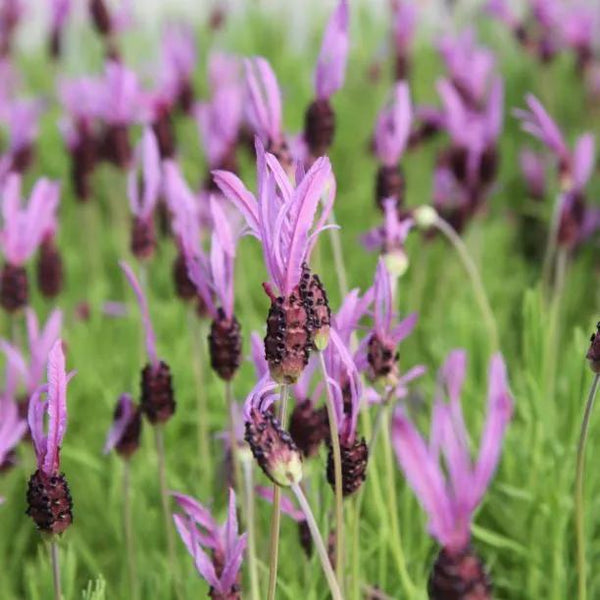
butterfly lavender plant French Butterfly Lavender Papillon – Stoechas to 60cmVariety: Papillon Species: Lavandula stoechas (French lavender Butterfly lavender) Colour: Purple flower heads topped with distinctive violet "ears" (bracts) Foliage: Evergreen, aromatic, grey green slightly more resinous than English lavender Height: About 60cm (24in) Spread: Around 60cm Flowering: May to August typically a month before English lavenders start Scent: Warm and resinous. Pleasant but noticeably different from the sweet scent of English
- Variety: Papillon
- Species: Lavandula stoechas (French lavender / Butterfly lavender)
- Colour: Purple flower heads topped with distinctive violet "ears" (bracts)
- Foliage: Evergreen, aromatic, grey-green — slightly more resinous than English lavender
- Height: About 60cm (24in)
- Spread: Around 60cm
- Flowering: May to August — typically a month before English lavenders start
- Scent: Warm and resinous. Pleasant but noticeably different from the sweet scent of English lavender
- Hardiness: Needs a sheltered, sunny spot. Not reliably hardy in colder inland or northern areas — a pot you can move under cover in winter is the safest option for most of the UK
- RHS AGM: No
- Sold as: Pot-grown plants (P9 & 2L available depending on season)
- Plant outdoors: From late April onwards when soil is warming. Wait until late May in exposed or northern gardens
- Delivered: From April/May, weather dependent
Papillon Lavender — Nothing Like Granny's Lavender
Most people, when they picture lavender, see neat spikes of purple-blue on silver stems. Papillon does not look like that at all. The flowers sit in chunky, rounded heads like small pineapples, and each one is topped with a pair of tall, coloured bracts that stand upright like rabbit ears. In the garden, they move in the breeze, which gives the whole plant a flickering, animated quality that English lavenders just do not have. The name means butterfly in French, and you can see why — those bracts do look like wings. The colour is a rich purple, darker in the flower head and lighter in the ears, and the overall effect is closer to something you would find in a warm Iberian hillside than a Surrey front garden. Which is, of course, exactly where it comes from.
Papillon flowers earlier than English varieties, often from May, and will keep going through to August if you cut or deadhead. The scent is warmer and more resinous than Hidcote or Munstead — pleasant, but you would not use it for cooking. The honest truth about this French lavender is it is not fully hardy. It is not as tough as English lavender. In a sheltered, south-facing spot with good drainage, it will come through most winters perfectly well, but a cold, wet January on heavy clay in the Midlands will probably kill it. We say this not to put you off but because we would rather you planted it where it can thrive than lose it and blame yourself.
A Mediterranean Hillside Plant in a British Garden
Lavandula stoechas grows wild across the western Mediterranean — Portugal, Spain, southern France, Sardinia, North Africa. In those places it colonises dry, rocky ground with thin, acidic soil and baking summer heat. It is the lavender that the Romans would have known, and the one that has been growing longest in cultivation. The common name "French lavender" is slightly misleading because it is actually more Spanish and Portuguese than French, but the name stuck centuries ago and nobody is going to change it now. Papillon is a selected garden form with particularly vivid ears and a tidy, compact habit, bred for containers and sheltered borders rather than hillside scrub. The taxonomy inspectors might insist we call it Lavandula stoechas subsp. stoechas, but life is too short.
Planting Companions
A warm south-facing wall with Papillon at the front and rosemary behind it will more or less look after itself. Santolina and thyme are natural partners from the same Mediterranean habitat. In a large container, try it with Lusi Purple, the more compact French lavender, for a graduated pair. The effect of French lavender alongside English varieties like Hidcote is interesting — the different flower shapes create contrast, and the earlier flowering season of Papillon gives you colour weeks before the English lavenders join in.
Why Buy from Ashridge?
Your Papillon lavender is UK-grown and dispatched when conditions are right for planting, delivered by next-day courier. Every plant is guaranteed and if you need advice our gardeners in Somerset are on the phone to help. Have a look at our French lavender collection or browse all our lavender plants. We hold a Feefo Platinum Service Award, which says something too.
Frequently Asked Questions
Our lavender growing guide covers the basics for all types. Here are the questions specific to Papillon.
What is the difference between French lavender and English lavender?
They are different species. English lavender (Lavandula angustifolia) has narrow flower spikes, silver foliage, and a sweet scent — it is fully hardy throughout the UK and the one most people think of. French lavender (Lavandula stoechas) has those distinctive "ears" on top of rounded flower heads, a more resinous scent, and it flowers earlier. The trade-off is hardiness: French lavender needs a sheltered spot and may not survive a harsh winter in colder parts of the country. They look very different in the garden and they are worth growing for entirely different reasons.
Can I grow Papillon lavender in a pot?
A pot is actually the best way to grow it in most of the UK. Use a container at least 25cm across with good drainage, and you can move it to a sheltered spot or cold greenhouse over winter. Papillon stays compact enough at around 60cm to look good in a pot for several years without outgrowing it. Terracotta suits it better than plastic — the extra weight stops it blowing over and the porous clay helps the roots stay drier.
Will Papillon lavender survive winter in the UK?
It depends where you are and what your soil is like. In the south and west, in a sheltered spot with free-draining soil, it will usually come through winter without trouble. In colder inland areas, the Midlands, the north of England, and Scotland, it is a gamble. Wet cold is the real killer — cold feet in waterlogged soil over January and February will do more damage than frost alone. If you are not sure, grow it in a pot and bring it somewhere sheltered when temperatures drop below about minus five for prolonged periods.
When does French lavender flower?
From about May, which is a good month earlier than most English lavenders. It keeps flowering into August, sometimes later in a warm year, especially if you pick off the spent flower heads as they fade. That early start is one of the best reasons to grow it — you get lavender colour and pollinator interest in the garden while your Hidcote and Munstead are still just green mounds.
Is Papillon lavender good for bees?
Very good. The flower heads are packed with nectar and the long flowering season from May means bees visit it at a time when there is less competition from other plants. We have noticed on the nursery that bumblebees seem to prefer the French lavenders slightly over the English ones in May, probably because there is less else available. By July, when the English lavenders are in full flower, the bees spread out. But in those early weeks, a pot of Papillon by the back door will be humming.
Shipping Notes
- Free Standard Shipping on $100+ Orders to the USA.
- Except Preorder products are shipped in 48 hours.
- Delivery to the USA:
- Standard Shipping : 3-10 business days
- If time is of the essence, please consider selecting expedited delivery for faster service.
Exchange/Return Notes
- We offer a 30-day return/exchange service after receiving.
- Final sale items are not eligible for returns or exchanges.
- To process your return/exchange, please contact us at [email protected]
- Please click here for more details>>> Return & Exchange Policy