SKU: 37575236085
can you plant gardenias in a pot

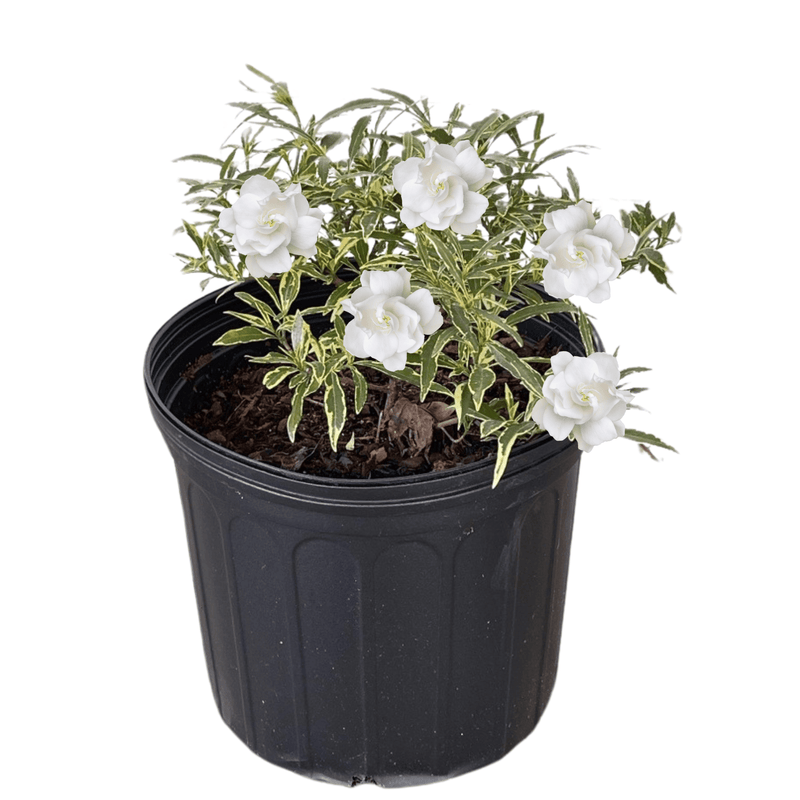
can you plant gardenias in a pot Dwarf Radicans Variegated Gardenia, 3-Gallon Size

Sale price$24.16 Regular price$26.84
Save 10%

Pay in installments of $6.71 with ShopPay, AfterPay and Klarna

Shipping Estimate
USA
  • USA
  • CAN

Ships within 48 hours · Estimated delivery Oct 4 - Oct 9

Promo Codes Available:

For Your Every Summer RSVP, with Code: SUMMER15

Description

can you plant gardenias in a pot Dwarf Radicans Variegated Gardenia, 3-Gallon SizeDwarf Radicans Variegated Gardenia 3 gallon Potted Plant The Dwarf Radicans Variegated Gardenia (Gardenia jasminoides 'Radicans Variegata') is a compact, evergreen shrub known for its striking variegated foliage and fragrant white flowers. Its glossy, dark green leaves are edged with creamy white margins, providing year round visual interest. This dwarf cultivar is a perfect choice for small gardens, container plantings, or as a low hedge. In addition

Dwarf Radicans Variegated Gardenia 3-gallon Potted Plant

The Dwarf Radicans Variegated Gardenia (Gardenia jasminoides 'Radicans Variegata') is a compact, evergreen shrub known for its striking variegated foliage and fragrant white flowers. Its glossy, dark green leaves are edged with creamy-white margins, providing year-round visual interest. This dwarf cultivar is a perfect choice for small gardens, container plantings, or as a low hedge. In addition to its ornamental beauty, the Radicans Variegated Gardenia emits a sweet fragrance in the summer, making it an ideal addition to any landscape that benefits from minimal care and maximum appeal. It’s cold-hardy in USDA Zones 8 to 10, making it suitable for a variety of climates.

Planting Instructions:

Ideal Location:
Light: Plant your Dwarf Radicans Variegated Gardenia in a location that receives full sun to partial shade. It prefers 4-6 hours of direct sunlight each day, although some afternoon shade is beneficial in hotter climates to protect the plant from heat stress.
Space: This cultivar is more compact than other gardenia varieties, growing to about 1-2 feet in height and 2-3 feet in width. It’s perfect for smaller spaces, containers, or as a ground cover. Space plants 2-3 feet apart for good air circulation.

Soil:
Gardenias prefer acidic soil with a pH between 5.0 and 6.0. The Dwarf Radicans Variegated Gardenia thrives in well-draining, slightly acidic soil.
If your soil is alkaline or clay-heavy, amend it with organic matter such as peat moss or pine bark to lower the pH and improve drainage.

Planting:
Dig a hole twice as wide and the same depth as the root ball of your gardenia. Remove the plant from its container and place it in the hole.
Backfill with soil, firming it around the root ball to eliminate air pockets. Water thoroughly after planting to settle the soil.
Mulch around the base with a layer of pine bark or wood chips to maintain moisture and suppress weeds.

Watering:
New Plantings: Water regularly to keep the soil evenly moist for the first few months while the plant establishes roots. Avoid overwatering, as gardenias do not like "wet feet."
Established Plants: Once established, the Dwarf Radicans Variegated Gardenia is somewhat drought-tolerant but thrives with consistent moisture. Water deeply during dry periods, ensuring that the soil drains well.

Temperature:
This plant is hardy in USDA Zones 8 to 10 and can tolerate light frost. It thrives in areas with mild winters and warm summers.
In colder climates (zones 7 and below), protect the plant during harsh winters with mulch or by covering it with a frost cloth to prevent frost damage.

Fertilizing:
Feed your gardenia with a slow-release, balanced fertilizer designed for acid-loving plants. Apply in early spring, just as new growth begins.
Avoid fertilizing in late fall or winter, as this may promote new growth that could be damaged by cold temperatures.

Pruning:
Light pruning is recommended after the plant blooms to shape the shrub and remove any spent flowers. This will encourage healthy growth and more blooms.
Prune back any dead or damaged branches throughout the year to maintain a neat and tidy appearance. Avoid heavy pruning, as this may reduce the number of flowers the plant produces.

Mulching:
Apply a 2-3 inch layer of mulch around the base of the plant to help retain moisture, regulate temperature, and keep weeds at bay. Be sure to keep the mulch away from the plant's stem to prevent rot.

Repotting (for container plants):
If you are growing the Dwarf Radicans Variegated Gardenia in a container, repot it every 2-3 years. Choose a slightly larger pot and use a well-draining, acidic potting mix to provide room for growth.

The Dwarf Radicans Variegated Gardenia is an ideal choice for those with an SCO (Self-Care and Outdoor) lifestyle. It requires minimal maintenance after establishment, offers beautiful variegated foliage and fragrant flowers, and can thrive in a variety of conditions.

Pollinator-Friendly: The fragrant flowers attract pollinators, including bees and butterflies, which makes it a great addition to a wildlife-friendly garden.

Winter Protection: If planting in an area with cold winters, apply a layer of mulch around the base or cover the plant with burlap or frost cloth during extreme weather to protect it from frost damage.

With its fragrant flowers, beautiful variegated foliage, and compact size, the Dwarf Radicans Variegated Gardenia is a perfect, low-maintenance choice for gardeners who want to enjoy a beautiful plant with minimal effort. It’s a wonderful addition to small spaces or containers, adding color, fragrance, and texture to your outdoor living space year-round.

Shipping Notes
  • Free Standard Shipping on $100+ Orders to the USA.
  • Except Preorder products are shipped in 48 hours.
  • Delivery to the USA:
  1. Standard Shipping : 3-10 business days
  • If time is of the essence, please consider selecting expedited delivery for faster service.
Exchange/Return Notes
  • We offer a 30-day return/exchange service after receiving.
  • Final sale items are not eligible for returns or exchanges.
  • To process your return/exchange, please contact us at [email protected]
  • Please click here for more details>>> Return & Exchange Policy
SKU: 37575236085

Discover Niche Categories That Outsell can you plant gardenias in a pot

Top-Converting Item to Boost Your Average Order

4.9 ★★★★★
Based on 23 reviews
Sort
Highest Rating
Newest First
Oldest First
Product Reviews
N
Verified Purchase
Nerd
Carnegie, US
★★★★★ 5
dry mouth
Item Package Quantity: 1
if you have sjogrens or anything else that dries your mouth
WAS THIS REVIEW HELPFUL?YesReportShare
Reviewed in the United States on June 2, 2026
K
Verified Purchase
Kev21392
Houston, US
★★★★★ 5
I love Dr Jen products
Item Package Quantity: 1, Item Package Quantity: 1
This is my favorite dry mouth gel that I’ve tried. I sleep with my mouth open and take medication at night that causes dry mouth so I have zero saliva during sleep. This gel has helped the most. Sometimes I wake up in middle of night and my mouth will still be dry so I reapply. The taste is very mild , I love that it has nano hydroxyapatite as I have gerd and like the extra enamel support.
WAS THIS REVIEW HELPFUL?YesReportShare
Reviewed in the United States on February 8, 2026
E
Verified Purchase
eden
Houston, US
★★★★★ 5
A treasure: surprisingly easy read for being so well researched and referenced
was recommended by Chris Kresser (Healthy Sceptic blog). I admit I was skeptical: the titel, at first glance, comes across as pretentious, and the front page has a weird 80s feel to it. Anyway, Chris knows his stuff, so I bought it. The PHD book is priceless. Yes, this is the best book about diet. I had been on a Paleo diet for a month when I got the book. I was motivated to change my diet, but after reading the book, first quickly once, and then more carefully a second time, I was even more motivated. I was convinced that I had to make a change for life. Other reviewers have summarized the contents well, so I will not. Eliminate processed foods, grains (except rice), legumes and most sugars. Stick to high fat diary. Bottom line in terms of macronutrient ratios is: not too much carbs, plenty of good fats, and ideally some protein restriction. I believe better authors could not have been found. Even though Shou-Ching Jaminet is a cancer researcher, none of them came to this from a medical or nutrition background, which is probably an advantage. They have experienced chronic disease themselves, and were committed to find solutions and understand pathways that were not well understood. They have enormous intellectual capacity (scrutinizing studies from PubMed the way they do is, well, impressive). They are open minded. And, not the least, I think they are driven by not only intellectual curiosity, but alturism, which, gives the whole project a very humane and caring feel to it. What is the difference between this diet and the Paleo diet? There are many variations of the Paleo diet, but Cordain at least recommends lean meats, which is the opposite of what the PHD recommends. The PHD "allows" full fat diary and rice, which is not recommended by most other Paleo diets. The PHD also has a rather specific macronutrient ratio recommendation. The results? Well, I started on a Paleo / GAPS protocol about a month before I got this book, so I cannot really say that all the improvements I have had can be attributed to this book. And after 48 hours without any processed foods, grains, legumes, sugar (apart from low carb from starches) and diary, I went from standing, sitting and walking with great joint pain, to only slight pain. A skin condition I had improved as well. Two weeks after I got the book, I tried using almost only rice as my carbohydrate source for 10 days. That increased my joint pain slightly. I think I in any case might have been in the high range of the carbohydrate intake during this period, which might be the reason for the change to the worse, rather than the type of starch I ate. The other thing though, is that once I started eating rice, and maybe too generous portions, my carb cravings were significantly elevated. I will try to stick mostly to sweet potatoes, taro, pumpkin, carrots, zucchini, berries and fruits (in the morning) for carbs. I have started implementing their supplement regime. I was skeptical at first, because, like many people, I prefer getting micronutrients from food, not supplements. But I decided to try since I had some heath issues and blood panel results that had to be improved. After about two weeks, I feel a bit better. I have a bit more energy and my head feels clearer. Am I skeptical to anything? Not much. - As I said, they convinced me to try their supplement regime and I do not regret it. I think anyone with an autoimmune condition, chronic disease - even a suspected chronic infection - should do so. For those who are fortunate to be 100% healthy and full of energy, well, maybe they do not need to take all the supplements if the diet is very dialed in. - At first I thought the macronutrient ratios were a bit too rigid. After reading the book a second time, I felt they presented a convincing argument. I will never weigh and measure my food, so I do not know exactly what my macro ratios look like, but the book provides very useful guidance. - Then, rice. I would have liked to see a bit more on why they think rice is a "safe" grain. Also, since it is not very nutrient dense, I think it gets a bit too much favorable mention. Eating food with low nutrient density and then taking lots of supplements does not sound like a perfect health diet. But this is a detail - people do not have to eat a lot of rice on this diet, and it is good to know that it is pretty okay to eat it from time to time. I have used their blog a lot, for tweaking my supplement regime, for recipes etc. It is an excellent companion to the book. For the next edition, I have the following wishes: - An index - Improvements in lay-out (sorry, but it is incredibly ugly): margins needed, footnotes can be smaller, table of contents more reader friendly etc. - A chapter with summary recommendations for common autoimmune conditions and chronic infections. - A bit more info on diary. Why high fat diary is okay for most people, and for what conditions diary should be eliminated completely (and why). Conclusion: I honestly think this book is such a treasure. I have translated and adapted the main recommendations into my native language for my family. It is difficult to persuade anyone about diet, but it is difficult not to try with people you really love. I do not doubt for a second that following the recommendations contained in this book can go a long way in reversing, even curing diseases, and definitely preventing diseases. I feel very grateful to Paul and Shou-Ching Jaminet. Thank you.
WAS THIS REVIEW HELPFUL?YesReportShare
Reviewed in the United States on July 27, 2011
I
Verified Purchase
Isaac J. Knoflicek
Lake Worth, US
★★★★★ 5
Changed My Life
Format: Hardcover
The year the Green Bay Packers drafted BJ Raji I remember being extremely shocked that I weighed almost the same as him (319 was my peak). Winter of 2009 I started riding a stationary bike fairly regularly, Spring of 2010 I started bike commuting regularly and by summer of 2012 I was down 60 pounds. As I became more interested in fitness I was more interested in how the body handled different kinds of macro nutrients. I did a few random Google searches for a book on the topic and in June of 2012 I found a review of the original PHD edition which made it sound like what I wanted. I wasn't looking to change my diet, I had a lot of joint pain and was very susceptible to binge eating/drinking, but I was loosing weight so overall I was happy. I remember reading the first chapter where it explained the "gotchyas" like having to give up wheat and laughing out loud at the though of it. I was a complete carb fiend to the point where I'd been baking my own homemade artisan breads. I found the book to be a quick read, it took me only a week. I definitely went a bit cross eyed at some of the more complex biology, but overall I found it as entertaining as it was informative, and when I'd finished I thought "What the hell", I'll try it for a week or two and see what happens. My first weekend was a little rough because I went out with some friends and because bar we were at only had fried foods, I ended up drinking way too much on an empty stomach. My first attempt at baking salmon the next day was promptly thrown up, but fortunately it didn't give me a bad taste for the fish. In only a few days I started to notice how different being hungry felt. I'd always made it a point to have breakfast and not eat again until Lunch, but I usually had a few spikes of intense hunter which I had to fight past. On this diet the hunger was there but it was more of a casual suggestion. Needless to say I had such an easy time on my two week trial that I kept the diet. That summer I lost as much weight as I had the previous two combined. I feel much more even in terms of mood, my mind feels sharper, I have a nice even energy level all day. I had hoped my joint pain would clear up faster, but it has definitely gotten better as well. I'd been wanting to reread the PHD for a while, but I knew the new edition was coming out soon so I held off. I was aware of some of the changes from following the blog (which is excellent, it's such a trip to have Paul give expert answers to your questions personally), but still wanted to go through the whole thing again. The new version is a definite improvement. Like I'd mentioned some of the biology in the original edition, particularly on the different types of fats, came early and confused and discouraged me a bit. This version they hook you in with simpler explanations and do a better job of building up the biology as you go. Also after the original edition I had to do a lot of fine tuning to the diet based on questions I'd ask Paul on blog, or going back and reading other peoples questions. In this edition they do a much better job of practically spelling out things so its easier to jump in. Finally the reader results that are included in the new edition are a really neat addition. I'd read a lot of them on the blog as well, but they're so amazing and inspiring, sprinkling them into the text the way they did was a really great idea. After finishing this new edition I feel freshly excited about a diet I've been on for half a year. I also feel better about recommending this edition to friends because it reads so much easier. I highly recommend this book to anyone looking to gain health, loose weight, or even just learn about how their bodies work.
WAS THIS REVIEW HELPFUL?YesReportShare
Reviewed in the United States on December 29, 2012
G
Verified Purchase
gp2x
Natrona Heights, US
★★★★★ 5
I can't believe how much better I feel!
I had been eating (very) low-carb and high-protein for the better part of a decade - and I had gotten a lot of practice arrogantly dismissing suggestions (from any source) that I should change anything about my diet. It is a testimony to the insightfulness of this book that it persuaded me to change. How was I persuaded? * The Jaminets are highly educated (Ph.D.s both), but not they're not nutritionists and are not bound by any party line. * They amass a huge volume of scientific literature in support of their assertions - about 1/3 of every page is journal citations. * They write clearly, and are clearly motivated by a desire to share the keys they've discovered for better health. * Time after time, while reading, I exclaimed "so *that's* why!" - there's an overarching framework they build, and after reading it I have a much broader and deeper understanding of health and nutrition. The changes I made were: 1. Eat a modest amount (15-20%) of calories as carbs from what they call "safe starches" (rice & potatoes in my case.) 2. Eat a large (~70%) of calories from fat. In particular, I consume dramatically more butter (kerrygold!), and I've added a fair bit of coconut oil too. 3. (As a result, the amount of protein I eat has dropped somewhat.) 4. Supplementing with a mix of the vitamins they recommend. 5. Doing a 24-hour fast once a week. Results: (after 1.5 months or so.) 1. I'm no longer "brain-dead" and unable to think in the evenings after work. 2. I no longer have fruit or chocolate cravings. 3. I'm much happier, and wake up looking forward to the day. 4. I've been much more social. 5. The extra starch has not resulted in weight gain. (I always gained weight when eating carbs before.) 6. It looks like the fasting (which I've never tried before) is helping my alertness and also contributing to healthy weight loss. It took less than a week for me to notice dramatic changes. The diet guidelines are straightforward and fit on a page, but the explanatory material is priceless. The Jaminets post on an ongoing basis at their perfecthealthdiet dot com blog as well. I can't recommend this book highly enough.
WAS THIS REVIEW HELPFUL?YesReportShare
Reviewed in the United States on January 2, 2011

recommand products