SKU: 42130400144
can i plant asparagus in pots

can i plant asparagus in pots Buy Foxtail Fern Phoenix, AZ | Asparagus densiflorus

Sale price$20.82 Regular price$23.13
Save 10%

Pay in installments of $5.78 with ShopPay, AfterPay and Klarna

Shipping Estimate
USA
  • USA
  • CAN

Ships within 48 hours · Estimated delivery Sep 30 - Oct 5

Promo Codes Available:

For Your Every Summer RSVP, with Code: SUMMER15

Description

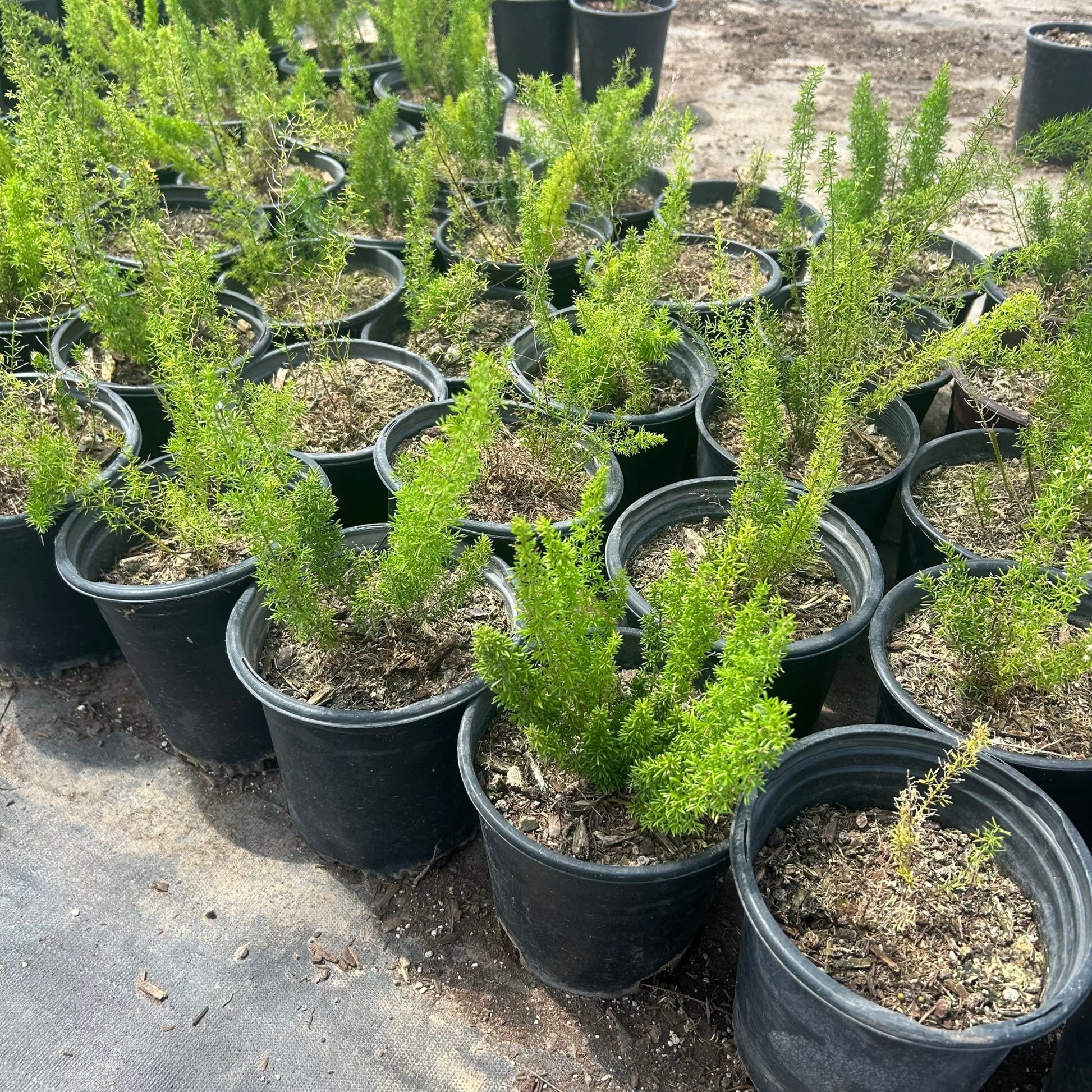
can i plant asparagus in pots Buy Foxtail Fern Phoenix, AZ | Asparagus densiflorusPhoenix's Most Elegant Texture Plant Foxtail Fern Foxtail Fern (Asparagus densiflorus 'Myers') is one of the most striking and versatile texture plants for Phoenix and Scottsdale landscapes. With its dense, plume like emerald green fronds that resemble a fox's tail, it adds lush, year round elegance to borders, containers, and mixed plantings throughout Chandler, Gilbert, and Mesa. Despite its delicate, feathery appearance, Foxtail Fern is a

Phoenix's Most Elegant Texture Plant — Foxtail Fern

Foxtail Fern (Asparagus densiflorus 'Myers') is one of the most striking and versatile texture plants for Phoenix and Scottsdale landscapes. With its dense, plume-like emerald-green fronds that resemble a fox's tail, it adds lush, year-round elegance to borders, containers, and mixed plantings throughout Chandler, Gilbert, and Mesa. Despite its delicate, feathery appearance, Foxtail Fern is a remarkably tough and drought-tolerant perennial that handles Phoenix heat with ease. Whether you're softening a modern desert landscape in Tempe, creating a lush contrast beside boulders in Scottsdale, or filling a shaded patio container in Peoria, Foxtail Fern delivers sophisticated texture with minimal care.

Foxtail Fern Plant Details

Attribute Detail
Scientific Name Asparagus densiflorus 'Myers'
Common Names Foxtail Fern, Myers Fern, Plume Asparagus
Mature Height 2–3 feet
Mature Width 2–4 feet
Growth Rate Moderate — 1 foot per year in Phoenix
Sun Full sun to partial shade. Tolerates reflected heat with adequate water.
Water Low to moderate once established. Highly drought-tolerant.
USDA Zones 9–11 (Phoenix is Zone 9b–10a)
Soil Well-draining. Adapts to Arizona caliche soils once established.
Foliage Evergreen — stays lush and bright green year-round
Bloom Small white flowers in spring; followed by red berries in fall
Pet Friendly No — berries are mildly toxic to cats and dogs

Foxtail Fern Uses in Phoenix Landscapes

Texture Accent in Desert and Tropical Borders

Foxtail Fern's soft, feathery plumes create a beautiful contrast beside coarser desert plants like Agave, Desert Spoon, and boulders throughout Scottsdale and Tempe. Plant in groups of 3–5 along borders or in front of larger shrubs for a layered, lush effect. The bright emerald-green color stands out brilliantly against tan gravel, decomposed granite, and adobe walls — making it one of the most effective "softening" plants in the Phoenix palette.

Shaded Patio and Container Plant

Foxtail Fern thrives in large containers and is an outstanding patio plant for covered or partially shaded outdoor spaces in Chandler, Gilbert, and Mesa. Use 16–24 inch pots with quality potting mix and keep well-watered during summer heat. Its upright, columnar form stays tidy in containers without pruning, and the bright green fronds look exceptional against terracotta, concrete, or dark metal planters.

Low-Water Groundcover and Border Filler

For landscape beds that need consistent greenery with minimal irrigation, Foxtail Fern is a reliable choice across the Phoenix Valley. Plant 2–3 feet apart for a lush, filled-in groundcover layer beneath larger trees or along fence lines in Peoria and Glendale. It pairs beautifully with other low-water plants like Texas Sage, Ruellia, and Lantana for a water-wise mixed border that's colorful year-round.

Poolside Accent Plant

Foxtail Fern is a popular poolside plant because its fine-textured fronds don't shed debris into pool water and its roots are non-invasive. It adds a lush, tropical feel to pool decks throughout Scottsdale and Paradise Valley while remaining manageable in size. Just note that the small red berries it produces in fall should be cleaned up if pets use the area, as they are mildly toxic.

Best Time to Plant Foxtail Fern in Phoenix

Fall planting (October–November) is ideal for Foxtail Fern in Phoenix. The warm soil encourages root establishment while cooler air reduces transplant stress, giving the plant a 6–8 month head start before its first Phoenix summer. Spring (February–March) is the second-best window. Avoid planting in the peak of summer when soil temps above 100°F can damage new root systems — if you must plant in summer, shade cloth and frequent watering are essential.

How to Plant Foxtail Fern

  1. Dig wide, not deep — excavate a hole 2–3x the root ball width at the same depth as the container.
  2. Check for caliche — break through any hardpan layer to ensure drainage. Foxtail Fern's tuberous roots need good drainage to avoid rot.
  3. Backfill with native soil — a light blend of 80% native soil and 20% organic compost works well.
  4. Spacing — plant 2–3 feet apart for groundcover; 3–4 feet apart for individual accent specimens.
  5. Water basin — build a 3-inch berm to direct water to the root zone.
  6. Mulch — 2–3 inches of bark or gravel mulch retains moisture and keeps roots cool in summer.

Watering Foxtail Fern in Phoenix

First Year Watering Schedule

Weeks 1–2: Water every 1–2 days, deep and slow. Month 1–2: Every 3–4 days. Month 3–6: Every 7–10 days (every 5 days during peak summer heat). After Year 1: Every 10–14 days in summer; every 3–4 weeks in winter. Foxtail Fern's thick, water-storing tuberous roots give it impressive drought resilience once established — one of the more forgiving plants in Phoenix landscapes.

Drip Irrigation

Position one 1 GPH emitter 12 inches from the base of the plant. Established Foxtail Ferns need far less supplemental irrigation than most ornamental plants — running drip every 7–10 days in summer is typically sufficient after year one.

Is Foxtail Fern drought tolerant? Yes — once established, Foxtail Fern is highly drought tolerant thanks to its thick, water-storing tubers. It handles Phoenix summers well as long as it gets occasional deep watering every 7–14 days.

Does Foxtail Fern lose its color in Phoenix? It can yellow in direct afternoon sun without adequate water. Position in partial shade or ensure consistent summer irrigation to maintain its brilliant emerald-green color year-round.

How big does Foxtail Fern get in Phoenix? Typically 2–3 feet tall and 2–4 feet wide in Phoenix gardens. It's a compact, tidy plant that rarely needs pruning to stay in shape.

Is Foxtail Fern pet safe? The small red berries produced in fall are mildly toxic to cats and dogs if ingested. The plant is generally safe in the landscape but should be avoided in areas where pets actively graze.

You May Also Like

Asparagus Fern — the cascading cousin of Foxtail Fern, with delicate arching fronds that spill beautifully from hanging baskets and raised planters.

Elephant's Food — a striking succulent shrub with sculptural form and fine-textured foliage that pairs beautifully with Foxtail Fern in Phoenix borders.

Firecracker Bush — a vibrant flowering shrub with bright red-orange blooms that creates a stunning color contrast alongside Foxtail Fern's emerald fronds.

Star Jasmine Bush — a fragrant evergreen shrub that complements Foxtail Fern's texture with dense white spring blooms and glossy foliage.

Tropical Bird of Paradise — a bold tropical accent with orange and blue blooms that pairs brilliantly with Foxtail Fern for a lush Phoenix landscape bed.

How Many Foxtail Fern Do I Need?

Foxtail Fern matures at 2 to 4 feet wide, so space plants about 2.5 to 3 feet apart for a filled-in groundcover layer, or set single specimens 3 to 4 feet apart. Use this guide for mass plantings at 30 inch spacing:

Area Plants Needed (at 30 in spacing)
Accent grouping 3 to 5 plants
25 sq ft bed 4 plants
50 sq ft bed 8 plants
100 sq ft bed 16 plants

For the lushest look, plant in odd-numbered clusters of 3 or 5 so the plumes knit together into a soft mound.

Foxtail Fern Season-by-Season in Phoenix

  • Spring (Feb to Apr): New emerald plumes push up and small white flowers appear. Best second planting window after fall.
  • Summer (May to Sep): Stays green through the heat with deep watering, but full afternoon sun can yellow the fronds. Give it morning sun or part-afternoon shade in the hottest exposures, and it appreciates the extra monsoon moisture.
  • Fall (Oct to Nov): Prime planting season. Red berries form (clean them up around pets, they are mildly toxic).
  • Winter (Dec to Jan): Evergreen and lush. Fronds can show tip burn in a hard frost below about 25°F but recover quickly; cover during a deep Valley freeze.

At a Glance

✔ Drought-Tolerant   ✔ Pool-Friendly (Low-Litter)   ✔ Evergreen   ✔ Low-Maintenance

Plant It With

  • Asparagus Fern: the cascading cousin, for spilling texture in raised planters and baskets nearby.
  • Tropical Bird of Paradise: bold orange-and-blue blooms that play off the fine green plumes.
  • Texas Sage: a silvery low-water shrub that contrasts the bright emerald fronds.
  • Desert Ruellia: purple flowers and a tidy mound to round out a water-wise mixed border.

Is Foxtail Fern Right for Your Yard?

Foxtail Fern thrives in morning sun to partial shade with well-draining soil and occasional deep water, and it is one of the few lush, fine-textured plants that holds up to Phoenix heat. It is ideal for softening desert borders, poolside beds, and shaded patio containers. It is not a fit for a blazing full-afternoon western exposure with little water, where the fronds yellow and scorch, and the fall berries make it a poor choice where pets graze.

Shipping Notes
  • Free Standard Shipping on $100+ Orders to the USA.
  • Except Preorder products are shipped in 48 hours.
  • Delivery to the USA:
  1. Standard Shipping : 3-10 business days
  • If time is of the essence, please consider selecting expedited delivery for faster service.
Exchange/Return Notes
  • We offer a 30-day return/exchange service after receiving.
  • Final sale items are not eligible for returns or exchanges.
  • To process your return/exchange, please contact us at [email protected]
  • Please click here for more details>>> Return & Exchange Policy
SKU: 42130400144

Discover Niche Categories That Outsell can i plant asparagus in pots

Top-Converting Item to Boost Your Average Order

4.8 ★★★★★
Based on 12 reviews
Sort
Highest Rating
Newest First
Oldest First
Product Reviews
M
Verified Purchase
Magnus
Birmingham, US
★★★★★ 5
Tasteless
Size: 16 Fl Oz (Pack of 1)
Mixes well enough into coffee. While it floats on the surface it also is effective as it is tasteless and I don't really notice it as I drink my coffee. It's an easy way to incorporate the health benefits.
WAS THIS REVIEW HELPFUL?YesReportShare
Reviewed in the United States on May 21, 2026
A
Verified Purchase
Anthony
Massapequa, US
★★★★★ 5
Yup. It's MCT (AFAIK), and its affordable!
Size: 32 Fl Oz (Pack of 1)
Great stuff. Great price. Great bottle! Packaged well, and the bottle design is flawless. It comes with two caps, one traditional cap style, and one hinged with a functional pour spout that prevents getting oil ALL over the bottle and ultimately EVERYTHING else like some other brands I've used in the past. Can't beat the price. Unfortunately, I cannot give a qualitative review as to the quality, as my testing capabilities are limited and any attempt to do so would be highly speculative. However, there is nothing obviously different (good/bad) about this verses competitor products. I will be purchasing regularly! :) ---------Opinion/Observation on overall performance balance for the constrained budget. -------- I think that the largest gain/loss is going to be your overall dietary consumption of quality fats, and reduction in carbs consumed and removal of sugars . E.g, it doesn't matter if your consuming an "metabolically optimized C8 isolated MCT oil" in the morning if you loading up on low quality fats in the afternoon, or if your other ducks are out of line (read: sleep, exercise and greater diet). Your better off spending less on your MCT, and more on your other needs to optimize your equation. In my personal case, I find being able to liberally use a cheap MCT (Viva) in larger quantities dynamically as needed throughout the day to keep myself energized and focused on the task at hand is a much better solution for efficiency than having to "ration" out a C8 isolate. Though I probably spend just as much if not more by using it this way, by being able to consume at a higher quantity, overall performance is greater in this case. Additionally, when consuming with other foods and metabolic efficiency and flavour is not as paramount (or when coconut would taste good), I'll opt for a quality coconut oil, as its also marginally cheaper per ounce. (about 13-15$/32oz compared to 18-20$/32oz for MCT). I have used HealthWorks Coconut oil in the past, and it was absolutely delicious. I recently got Kirkland (as on inspection it seemed to have the same qualities) for pennies on the dollar; but it tastes burnt, so I'm not sure if it was a batch issue, warehouse storage, or simply there processing methods but its defiantly not up to par in a taste test. I'll most likely try Viva in the future, as I've been impressed with them so far. Takeaway: Great product if you like to use a lot of MCT! Just make sure your micros (vitamins and minerals) are in check if you exceed the 50% fat macro level. :)
WAS THIS REVIEW HELPFUL?YesReportShare
Reviewed in the United States on October 26, 2016
D
Verified Purchase
David Burt
Port Orchard, US
★★★★★ 5
flavor, healthy
Size: 32 Fl Oz (Pack of 1)
Ok, this oil is perfect I've used it in baking and raw desserts, coffee, and shakes It last a long time and fid not go bad I would reccomend
WAS THIS REVIEW HELPFUL?YesReportShare
Reviewed in the United States on March 30, 2026
K
Verified Purchase
Kieran McCarty
West Palm Beach, US
★★★★★ 5
Takes the best from coconut oil, leaves the rest
Size: 32 Fl Oz (Pack of 1)
Regular coconut oil is recommended on paleo and keto diets, but it has a strong flavor and its solidity at room temperature means you can’t really use it on cold foods. This MCT oil derived from organic coconuts is a great solution for salad dressings, smoothies, and bulletproof coffee (even iced coffee!) that is vegan (instead of with butter) and more efficient at giving you energy than with coconut oil. Viva MCT Oil contains mostly Caprylic and Capric Acids, two of the three MCTs that are more efficiently converted to energy (the other one, Caproic Acid, is sort of unpleasant tasting, so they don’t include it in this mix) and very little Lauric Acid, which is a somewhat longer chain that takes longer to break down — some say it shouldn’t even be considered an MCT. Plain Coconut oil is about 75% Lauric Acid, so this oil is much more efficient in conversion to ketones for energy. It basically takes the best things in coconut oil and leaves the stuff that is less useful for ketosis. And unlike some MCT oils, Viva’s is derived only from (organic, non-GMO) Coconut oil, not Palm oil, so you don’t have to worry about contributing to deforestation in Indonesia and destruction of orangutan and tiger habitat. Although coconuts also can adversely affect ecosystems to some extent because birds don’t nest in them, thereby depriving the surrounding soil of the resupplied nutrients in bird guano, the trees take longer to grow than oil palms, so it’s less worth it to tear down forest to plant them, and there are industry consortiums dedicated to making coconut farms sustainable and eco sensitive. Although I like the flavor of coconut, there are some things I don’t want it in. For all of those, there’s Viva MCT Oil. I have asked the company if it would affect the effectiveness if I used it to cook with, there’s nothing on the package that indicates one way or the other. I’ll update this review when I get an answer.
WAS THIS REVIEW HELPFUL?YesReportShare
Reviewed in the United States on May 25, 2019
C
Verified Purchase
Customer
Louisville, US
★★★★★ 5
Purchase or perish.
Format: Paperback, Format: Paperback
I don't think Mike can produce anything below 5 stars. In his recent Christmas episode on the Naked Bible Podcast I was a bit wary of listening to it. I realize this is a review of his book here, but let me make my point. The problem with not wanting to listen to his Christmas episode is that I don't really care if Christmas was/is a pagan holiday. So, honestly, it wasn't appealing to me. Somehow I ended up listening to it, and I'm telling you the amount of information he crammed in there was FASCINATING. I'm not kidding. I was so tired of hearing that subject (because I've been born and raised into Christianity), but Mike and Trey did their thing and it had me on the edge of my metaphorical seat the entire time. If you listen to that episode (Naked Bible Episode 195) you'll see exactly what I'm talking about. And what's the point of all that I just said? It's that Mike doesn't do anything half way. All that he puts out is serious work that is worthy of much consideration. No Hillary v. Trump fact checking here (though I'm sure he'd encourage you to research what he's saying). The point is, however, that not everyone has the training that he or his contemporaries have. And THAT is exactly why it is paramount that we rely upon scholars who have said extensive training. I challenge you with this (something I've challenged myself to accept): You essentially know nothing about the Bible if you don't have not just Heiser's background, but other scholars such as John H. Walton. There are many to list, but Walton would be a good companion to list next to Heiser. If you're the lay-person, do yourself a favor and pick up this work, or The Unseen Realm (or both!) and any of Walton's work. Open up your mind and challenge yourself to realize that unless you are incredibly familiar with the Ancient Near East's way of life and thought processes, then it's highly likely that you don't actually understand what is going on when you read the Bible. Enter "The Bible Unfiltered." Considerations for the seminary student: This is a great book for those who need a quick reference on a particular subject. Heiser's name is well known, and thus to reference this book in one's papers, even for a one-liner, is to reference legitimate scholarship. I'm not advocating that one does one's entire paper off of just one chapter from this book, but my point is more-so that with Heiser's reputation it will be known that you're not quoting Joe Scholar who earned his PhD in I Do What I Want. If you know Mike then you know that he's done a lot of work to present to you CONTEXTUAL research on any given listed topic. For that alone the price is worth it (though it undoubtedly cost him more to do the research that it does for us to purchase the book). Considerations for the lay-person: 1. On p. 7, Heiser says, "If Bible study doesn't seem like work to you, you aren't really doing it." Yes, that's harsh, but so was Phinehas, Peter, Paul, and Jesus. (Even Bonhoeffer was harsh in his "The Cost of Discipleship")! Over and over again Heiser says on his podcast that Bible reading is not actually Bible STUDY (not yelling, I just don't have italics in this comment box). 2. This book is great for having a quick reference for subjects. You do not have to read the book in order to understand the content of any given chapter. I use this book to help direct me to other scriptures that I can't seem to remember. Here, Heiser treats topics with brevity, yet with depth at the same time--depth that stems from years of immersing hisself in the original cultural context, the surrounding culture's contexts, and original languages of the Bible. In other words, this book will act, for the lay person, as an appetizer that gets you excited for the full meal and subsequently spark a desire within you to finally take seriously contextual Bible study. If you've never read Heiser's stuff before, this is a great place for you to get introduced to his work. From here I'd recommend getting The Unseen Realm, and then Reversing Hermon. Follow all his other works at drmsh.com, nakedbiblepodcast.com, and moreunseenrealm.com (I'm not getting paid to say all of this). Considerations for the scholar: Rid yourself of your presuppositions, get with the times, and adopt the supernatural worldview of the Bible's authors, because yours isn't supernatural enough. (Can that be considered speaking the truth in love?...) (Pictures won't rotate for some reason. Sorry!). My hand on the book next to the Schuyler Bible shows the size of the book.
WAS THIS REVIEW HELPFUL?YesReportShare
Reviewed in the United States on January 3, 2018

recommand products