SKU: 47817299908
dark blue lavender plants

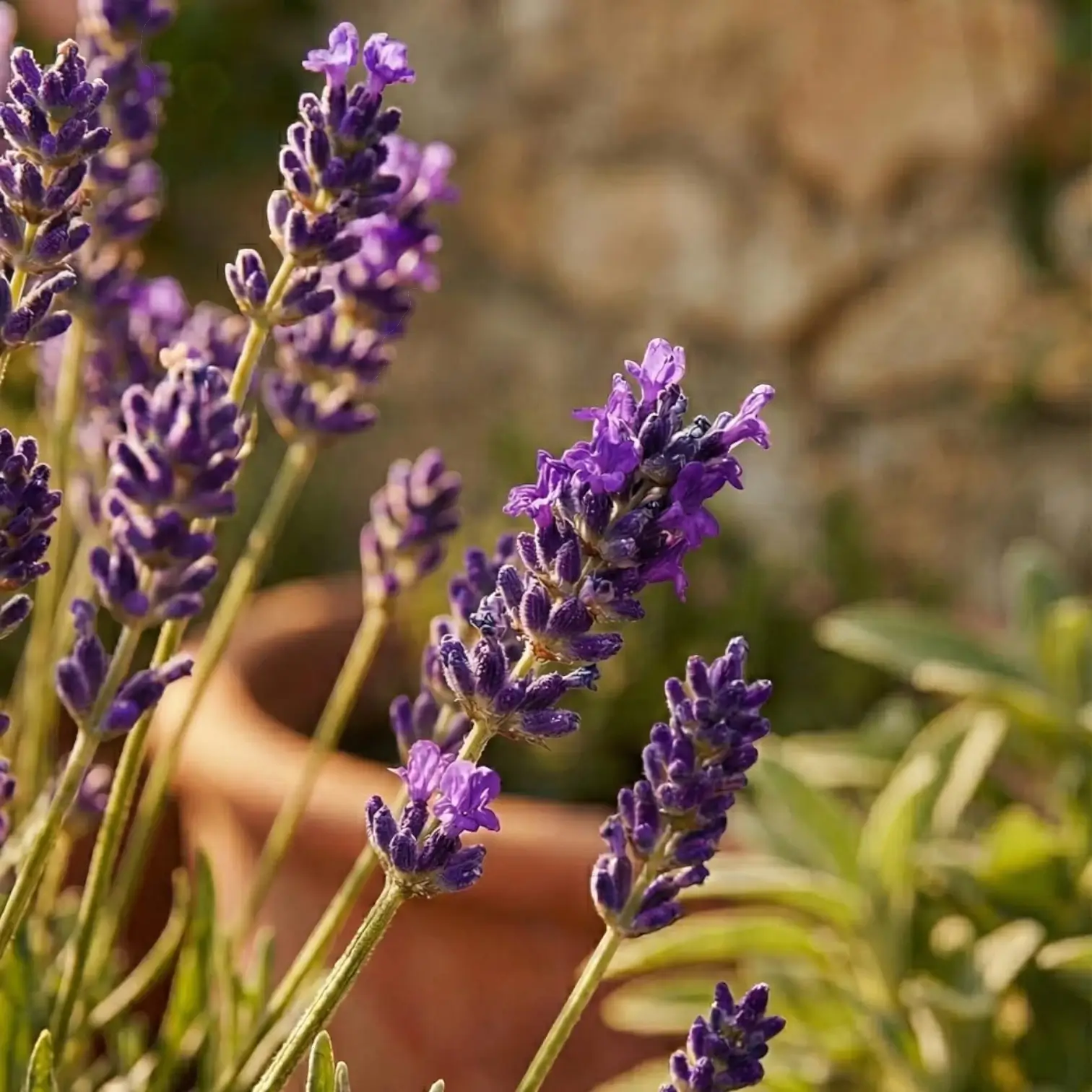
dark blue lavender plants Lavandula angustifolia 'Dwarf Blue' | Outdoor Plant

Sale price$22.86 Regular price$25.40
Save 10%

Pay in installments of $6.35 with ShopPay, AfterPay and Klarna

Shipping Estimate
USA
  • USA
  • CAN

Ships within 48 hours · Estimated delivery Oct 4 - Oct 9

Promo Codes Available:

For Your Every Summer RSVP, with Code: SUMMER15

Description

dark blue lavender plants Lavandula angustifolia 'Dwarf Blue' | Outdoor PlantCompact edging with Lavandula angustifolia 'Dwarf Blue' Lavandula angustifolia 'Dwarf Blue' keeps a low, tidy silhouette with aromatic grey green foliage and blue purple flower spikes in summer. Its scale is the point: it reads as a deliberate mound rather than a loose shrub, so it fits neatly along paths, in gravel planting, and in smaller containers. Once established, the plant holds its shape well and keeps its foliage looking present beyond the

Compact edging with Lavandula angustifolia 'Dwarf Blue'

Lavandula angustifolia 'Dwarf Blue' keeps a low, tidy silhouette with aromatic grey-green foliage and blue-purple flower spikes in summer. Its scale is the point: it reads as a deliberate mound rather than a loose shrub, so it fits neatly along paths, in gravel planting, and in smaller containers.

Once established, the plant holds its shape well and keeps its foliage looking present beyond the main bloom. Repeating several plants creates a clean line of texture and scent that stays legible even when neighbouring perennials are changing through the season.

How Dwarf Blue builds a low mound

Growth starts as new shoots push from the woody framework in spring, filling out into a dense cushion. Flower stems rise above the foliage as the plant moves into summer, then the mound settles back into evergreen structure once bloom finishes.

A mature plant typically sits around 30-40 cm tall, with a spread around 45 cm, depending on pruning and how lean the root zone stays. In pots, the outline often stays even tighter, which suits edging and repeated container displays.

Sun, drainage and root comfort

Bright, open exposure supports short growth, firm stems, and strong leaf scent. Soil texture matters more than richness: a mineral, free-draining root zone keeps the base of the plant in better condition over time.

Chalk, loam, and sandy soils can all work when water passes through easily. If the planting area tends to stay damp, raise the planting level slightly and build in grit so the crown dries between wet spells.

Container watering for Dwarf Blue

In containers, water management is mostly about avoiding a permanently damp centre. Use a pot with clear drainage and a gritty, peat-free outdoor mix that re-wets evenly but does not stay heavy for days.

Check moisture by feeling the pot weight and testing the top third of the mix. Water deeply when that zone has dried, then let excess drain freely. Short, frequent splashes encourage shallow roots and a softer mound.

Keeping the mound trimmed

Light trimming keeps this small lavender looking crisp and prevents the centre from opening. Aim for regular shaping in green growth, so the plant always has leafy points ready to respond.

  • After flowering: remove spent flower stems and lightly round the top growth.
  • Spring tidy: clip off winter-browned tips once new shoots are clearly visible.
  • Where to cut: stay within leafy growth rather than cutting back into bare old wood.
  • Feeding: keep nutrition modest; steady, firm growth is the goal.

Dwarf Blue issue signals

Most problems show up at the crown first. A soft, dull centre or sudden wilting is usually linked to a root zone that stays wet for too long, especially in pots after repeated rain.

Sparse flowering is more often linked to shade or overly rich soil than to lack of water. If the mound becomes leggy, it usually responds to earlier, lighter shaping and a more open, brighter position.

Where this small lavender works best

Lavandula angustifolia 'Dwarf Blue' suits planting where a compact, repeatable lavender shape matters: path edges, raised beds, gravel borders, and container groups. It reads well alongside stone, paving, and fine-textured grasses, and it keeps its place in a scheme even after flowering has finished.

Shipping Notes
  • Free Standard Shipping on $100+ Orders to the USA.
  • Except Preorder products are shipped in 48 hours.
  • Delivery to the USA:
  1. Standard Shipping : 3-10 business days
  • If time is of the essence, please consider selecting expedited delivery for faster service.
Exchange/Return Notes
  • We offer a 30-day return/exchange service after receiving.
  • Final sale items are not eligible for returns or exchanges.
  • To process your return/exchange, please contact us at [email protected]
  • Please click here for more details>>> Return & Exchange Policy
SKU: 47817299908

Discover Niche Categories That Outsell dark blue lavender plants

Top-Converting Item to Boost Your Average Order

4.8 ★★★★★
Based on 13 reviews
Sort
Highest Rating
Newest First
Oldest First
Product Reviews
R
Verified Purchase
Rick Watts
Birmingham, US
★★★★★ 4
Great Book for Church Leaders
Format: Paperback
In this book, Nouwen describes what he believes the key characteristics of a Christian leader are. These characteristics are guided by two stories for the Gospels: the story of Jesus' temptation in the desert (Matthew 4:1-11) and the story of Peter's call to be a shepherd (John 21:15-19). These characteristics are being prayerful rather than relevant, ministerial rather than popular, and being led rather than being a leader. Nouwen first explains that the temptation of today's ministers is to be relevant. Nouwen says that Jesus also had this same temptation. When Jesus was tempted by the devil in the desert, the first temptation was to turn stones into bread. With so many people in the world dieing of starvation, we all wish at times that we had the power to turn stones into bread. However, when Jesus was asked to perform the relevant behavior of changing stones into bread, he stuck to his mission to proclaim the Word and said, "One does not live by bread alone, but by every word that comes from the mouth of God" (Matthew 4:4). Rather than trying to be relevant to the world, a Christian leader should use Jesus as the source of their words, advice and guidance. It is through the discipline of contemplative prayer that Christian leaders can do that. It is not enough for Christian leaders to be moral people, well trained, eager to help their fellow humans, and able to respond creatively to the burning issues of their time. Christian leaders must truly be men and women of God, people with an ardent desire to dwell in God's presence, to listen to God's voice, to look at God's beauty, to touch God's incarnate Word, and to taste fully God's infinite goodness. The second temptation Nouwen says Christian leaders must avoid is the temptation to be spectacular. This was also Jesus' second temptation in the desert. "Throw yourself from the parapet of the temple and let the angels catch you and carry you in their arms" (Matthew 4:6). Jesus would not do it. He refused to be a stunt man to prove that he had something worthwhile to say. In stead Jesus said "Don't put the Lord your God to the test." Nouwen says that in today's church, individualism among ministers and priests is prevalent. Many do not have many skills to be proud of, but they still frequently feel that, if they have anything at all to show, it is something they must do solo. However, Nouwen says that ministry is not done solo, but in pairs. In Mark 6:7 Jesus sent the discipline out two by two to conquer evil. We cannot preach the Gospel on our own, we are called to share the Gospel together, in community. Nouwen goes on to say that ministry is also mutual. Jesus said, "I am the god shepherd. I know by own and my own know me, just as the Father knows me and I know the Father; and I lay down my life for my sheep" (John 10:14-15). Ministers have gotten the idea that good leadership means keeping a safe distance form those we lead. However, when the members of a community cannot truly know and love their shepherd, shepherding just becomes a subtle way to exercise power over others. Nouwen says that the only way to for us to over come this temptation is confession and forgiveness. This does not mean that ministers should bring their own sins into the pulpit. It means that ministers are called to minister with their whole being, including their wounded selves. The third temptation today's Christian leaders must overcome is the temptation of power. When the devil said to Jesus "All this I will give you if you will bow down and worship me." Jesus replied "It is written: 'Worship the Lord your God, and serve him only" (Matthew 4:9-10). Others say that having power - provided it is used in the service of God and your fellow human beings - is a good thing. Nouwen says that it was this rationalization that caused crusades, inquisitions, and the enslavement of Indians. He says it seems easier to be God than to love God, and easier to control people than to love people. Nouwen says that a common misconception among Christian leaders is that the older and more mature you get then more capable you become as a leader. However, John 21:18 says, "I tell you the truth, when you were younger you dressed yourself and went where you wanted; but when you are old you will stretch out your hands, and someone else will dress you and lead you where you do not want to go." Nouwen says that the most important quality of Christian leadership is not a leadership of power and control, but a leadership of powerlessness and humility. Powerlessness and humility in the spiritual life refer to people who are so deeply in love with Jesus that they are ready to follow him wherever he guides them, always trusting that, with him, they will find life and fine it abundantly. Nouwen says that the way to discern where we are being led by Jesus is through theological reflection. Theological reflection is thinking with the mind of Christ. The Christian leaders of the future have to be theologians, persons who know the heart of God and are trained - through prayer, study, and careful analysis - to manifest the divine event of God's saving work in the midst of the many seemingly random events of their time.
WAS THIS REVIEW HELPFUL?YesReportShare
Reviewed in the United States on November 19, 2010
V
Verified Purchase
Victoria
Port Orchard, US
★★★★★ 5
Not just for leaders
Format: Paperback
Even though this book is geared towards Catholic leaders and I’m not in a management/leadership role, I found the discussion of the temptation of fame, power, and relevance so applicable. It cut to my core. I think we all wrestle with those temptations in some way or another. Definitely one to read again and again!
WAS THIS REVIEW HELPFUL?YesReportShare
Reviewed in the United States on July 22, 2023
P
Verified Purchase
Paul A. Spangler
Grantham, US
★★★★★ 5
Henri is a great writer
Format: Paperback
Henri's books are often short and very deep. This is one of his best among so many. Worth the read.
WAS THIS REVIEW HELPFUL?YesReportShare
Reviewed in the United States on April 25, 2024
L
Verified Purchase
Linda Vecchiarelli
West Palm Beach, US
★★★★★ 5
Spiritual Leadership Insight .
Format: Paperback
Excellent book for reflection and wisdom on leadership issues within the church and spiritual communities. Was very inspiring underlined and highlighted so many points in the book which are consistent with my experience appreciate all of the genuine references to the reality of ministering to disenfranchisedv people.
WAS THIS REVIEW HELPFUL?YesReportShare
Reviewed in the United States on March 22, 2024
E
Verified Purchase
Evalina
Omaha, US
★★★★★ 5
Thought provoking
Format: Hardcover
A thought provoking read about the impact of hospitality. Read this book if you want [need] to be challenged to leave your comfort zone and find your mission field right where you are.
WAS THIS REVIEW HELPFUL?YesReportShare
Reviewed in the United States on May 26, 2026

recommand products