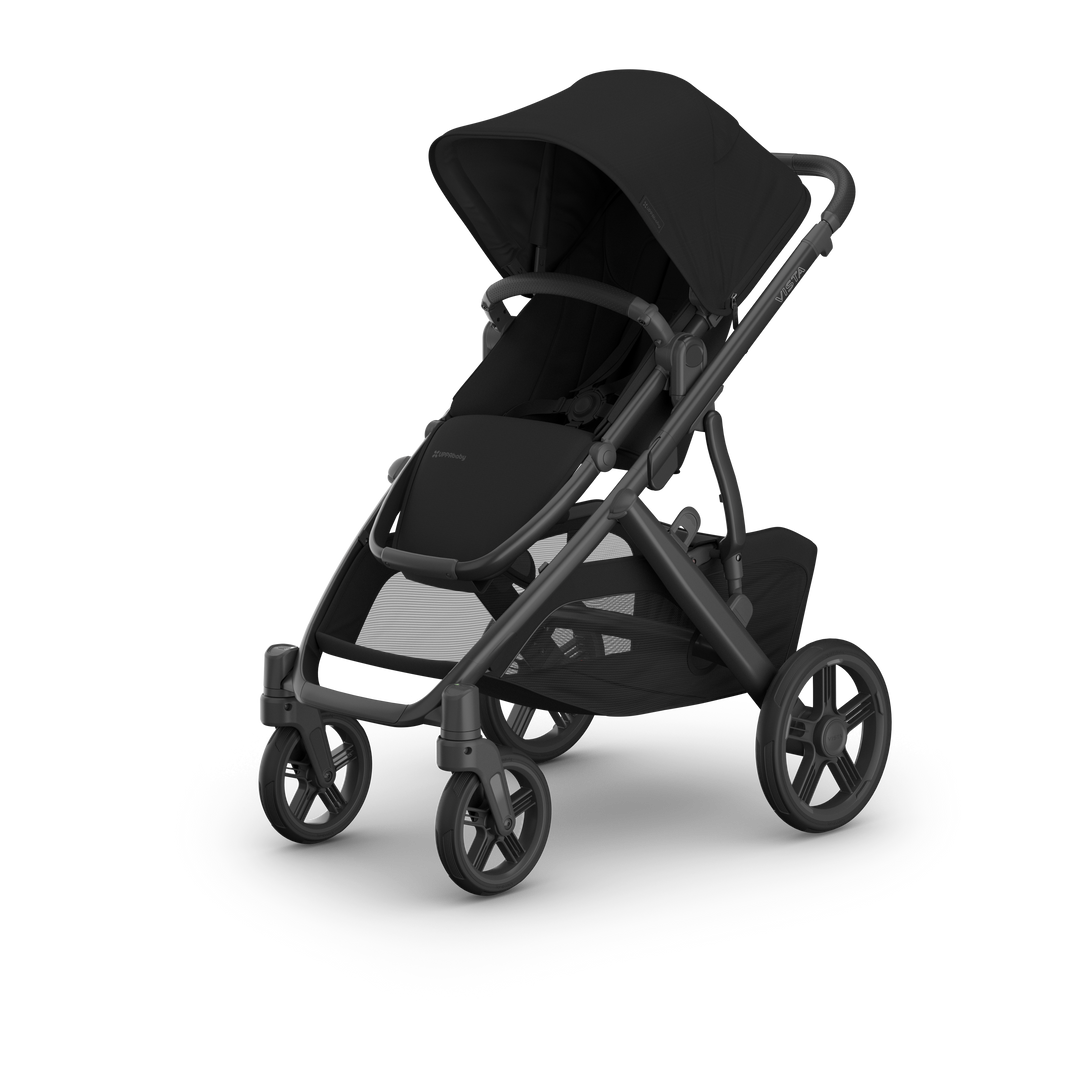
SKU: 70429072682
uppababy cruz v2 jake

uppababy cruz v2 jake Uppababy Vista v3

Sale price$20.84 Regular price$23.15
Save 10%

Pay in installments of $5.79 with ShopPay, AfterPay and Klarna

Shipping Estimate
USA
  • USA
  • CAN

Ships within 48 hours · Estimated delivery Oct 4 - Oct 9

Promo Codes Available:

For Your Every Summer RSVP, with Code: SUMMER15

Description

uppababy cruz v2 jake Uppababy Vista v3by UPPAbaby Babesta Pick Best Modular Family Stroller for NYC Category: Full size strollers Modular expandable strollers Travel systems Certifications: GREENGUARD Gold JPMA Certified REACH certified leather Warranty: 3 year transferable The UPPAbaby Vista V3 is a 27. 6 lb premium modular stroller suitable from birth (with Bassinet or Infant SnugSeat) through 50 lbs, offering 30+ configurations including single, double, and triple setups. As NYC's

by UPPAbaby  |  Babesta Pick — Best Modular Family Stroller for NYC

Category: Full-size strollers  |  Modular/expandable strollers  |  Travel systems

Certifications: GREENGUARD® Gold  |  JPMA Certified  |  REACH-certified leather

Warranty: 3-year transferable

The UPPAbaby Vista V3 is a 27.6 lb premium modular stroller suitable from birth (with Bassinet or Infant SnugSeat) through 50 lbs, offering 30+ configurations including single, double, and triple setups. As NYC's expert baby boutique, we consider the Vista V3 the gold standard for growing families who need one stroller to do it all — from newborn on the subway to a second child in a double configuration in Central Park. Its enormous 30 lb basket, never-flat tires, FlexRide suspension, and magnetic harness buckle make it one of the most well-engineered full-size strollers on the market.

For first-time parents planning for more children, families already expecting baby number two, or anyone who wants a stroller that evolves with their family without starting over — the Vista V3 is Babesta's top recommendation for a long-haul family stroller.


Specifications

Stroller weight (frame + seat)

27.6 lbs (frame: 19.8 lbs | seat: 7.8 lbs)

Folded dimensions (with seat)

16.3" × 25.7" × 33.8"

Folded dimensions (without seat)

11.3" × 25.5" × 32.3"

Unfolded dimensions

36" L × 25.7" W × 39.5" H

Fold type

One-step; self-stands when folded; can fold with or without seat

Suitable from birth?

Yes — with Bassinet or Infant SnugSeat accessory

Suitable without accessories?

3 months to 50 lbs (toddler seat)

Max child weight (toddler seat)

50 lbs (approx. age 4–5)

Max child weight (RumbleSeat)

40 lbs

Basket weight capacity

30 lbs — one of the largest in class

Seating configurations

30+ configurations; single, double, or triple

Seat positions

Forward-facing, parent-facing, multi-position recline (one-hand)

Handlebar

Adjustable telescoping height; one-hand operation

Suspension

Enhanced FlexRide™ — frame-integrated, smooth on city pavement

Tires

Never-flat; front wheel locks with visual indicators; all-terrain wheels optional

Canopy

Extendable UPF 50+; zip-out mesh panels; water-repellent

Harness

Magnetic buckle; easy no-rethread adjustment

Seat liner

All-Weather Comfort Seat; seasonal liner + converts to mesh

Certifications

GREENGUARD® Gold; JPMA certified; REACH-certified leather

Warranty

3-year transferable

Included in box

Stroller, toddler seat, seasonal seat liner, bug shield, rain shield, storage bag


Best For / Not For

Best For: Growing families (planning for a 2nd or 3rd child), parents who want one stroller from birth through preschool, Central Park walkers, Hudson Park strollers, parents who carry heavy loads (30 lb basket is best in class), and families building a UPPAbaby travel system with the Mesa or Aria infant car seat.

Not For: Parents who need an ultra-compact travel stroller, frequent subway folding/unfolding as a solo commuter, or those in 4th-floor walkups without an elevator. At 27.6 lbs it is not a carry-up-stairs stroller.

Available Colors

Colors

Jake (black), Greyson, Callum (blue), Kenzi (green/blue), Savannah (white/grey), Owen (charcoal mélange), Ada (beige), Julian (aqua) — plus limited editions

Frame options

Carbon (matte)


Is it suitable for my baby's age?

Newborn (0–3 months)

Yes — with the separately sold Bassinet (lie-flat, GREENGUARD Gold certified) or Infant SnugSeat accessory.

Infant (3–12 months)

Yes — toddler seat reclined, UPPAbaby Mesa or Aria infant car seat clicks in with no adapter needed.

Toddler (1–4 years)

Yes — forward or parent-facing seat, adjustable footrest and recline, magnetic harness, up to 50 lbs.

Two children

Yes — add the RumbleSeat V3 (up to 40 lbs) below the main seat. Upper Adapters (sold separately) give more legroom between seats.

Three children

Yes — add the PiggyBack Ride-Along Board for an older sibling. Folds flat and stays attached for the full fold.


Is it good for NYC / city use?

Yes, with context. The Vista V3 is Babesta's pick for NYC families who are settled into a neighborhood and strolling daily — think Park Slope, the UWS, Tribeca, Astoria. The FlexRide suspension handles uneven sidewalks, the basket holds a full grocery run (30 lbs), and the adjustable handlebar accommodates parents of any height for those long weekend walks. The one-step fold self-stands, so it's easy to manage in a cab or elevator building lobby.

Important NYC note: This is not a subway-carry stroller. At 27.6 lbs with a wide folded footprint, it is best suited to parents with a car, garage, or a building with elevator access. For families who want a Vista V3 AND a subway-friendly option, Babesta often recommends pairing it with a lightweight like the Joolz Aer2 for transit days.


Quick Comparison

Wider and heavier than the Bugaboo Fox and UppaBaby Cruz, but offers significantly more basket capacity (30 lbs vs ~10–22 lbs) and unmatched modularity for growing families. Lighter than the Bugaboo Donkey6 in double configuration. The Vista V3 is the clear choice when you need to expand to a double without switching strollers.


Car Seat Compatibility

No adapter needed

UPPAbaby Mesa, UPPAbaby Aria

Adapter required (sold separately)

Clek, Cybex, Bugaboo x Nuna


What's Included

•       UPPAbaby Vista V3 stroller frame

•       All-Weather Comfort Toddler Seat with magnetic harness buckle

•       Seasonal seat liner (for cooler months)

•       Toddler seat bug shield

•       Toddler seat rain shield

•       Toddler seat storage bag

•       3-year transferable warranty


Optional Add-Ons Available at Babesta

•       UPPAbaby Vista V3 Bassinet — for newborn lie-flat use (strongly recommended for 0–3 months)

•       Infant SnugSeat — for newborn seat use without the bassinet

•       RumbleSeat V3 — second seat for a second child (up to 40 lbs)

•       Upper Adapters — for added legroom between two seats in double configuration

•       PiggyBack® Ride-Along Board — for a third child or older sibling

•       UPPAbaby Mesa Infant Car Seat — clicks in without adapters

•       UPPAbaby Aria Infant Car Seat — clicks in without adapters

•       Car seat adapters for Clek, Cybex, Bugaboo x Nuna

•       All-Terrain Wheels (optional upgrade) — for parks, gravel, beach boardwalks

•       Cozy Ganoosh — footmuff/sleeping bag for cold NYC winters


Babesta Pick — Why We Carry It

There are a lot of full-size strollers on the market, but the Vista V3 earns its place as Babesta's top recommendation for growing families for a few reasons. First, the modularity is genuinely future-proof: if you have your first child and then get pregnant again, you don’t have to sell your stroller — you just add a RumbleSeat. Second, the basket is the best in class at 30 lbs; for NYC parents doing grocery runs, that matters every single day. Third, the magnetic harness buckle sounds like a small detail until you've wrestled a 2-year-old into a non-magnetic buckle in January. And fourth, the FlexRide suspension actually handles NYC sidewalks — we’ve tested it on Warren Street outside our store, and the ride quality over cracked pavement is noticeably smoother than competitors at the same price point.

The one honest trade-off: this is not a light stroller. If you live in a walkup, we’ll have a real conversation with you about whether this is your everyday stroller or one that lives in a car. That’s the kind of guidance you get at Babesta that you don’t get online.


Babesta Services on This Purchase

When you buy the Vista V3 from Babesta, you get:

•       Free in-store assembly and full stroller demo — we walk you through every fold, harness, and recline position

•       Home delivery below Canal Street NYC (assembled) and same-day courier delivery in NYC/Brooklyn (unassembled)

•       Hold it until you’re ready — buy it now, take it when baby arrives, no rush

•       Price match guarantee — found it cheaper? We'll match it

•       Registry support — add to your Babesta registry with expert guidance on compatible accessories


Frequently Asked Questions

Can I use this as my only stroller?

Yes for most NYC families in elevator buildings or with a car. If you live in a walkup, we’d recommend pairing it with a lightweight like the Joolz Aer2 for those days. The Vista V3 is a daily stroller, not a travel/carry stroller.

This being said, we find that most parents we work with need a stroller for the neighborhood, but also want another for quick trips around the city or adventures abroad. So you can use it as your one and only, but you may want to consider a lightweight for later just to make travels even easier.

Does the bassinet come included?

No — with the V3, the bassinet is sold separately. Babesta strongly recommends it for the newborn phase (0–3 months). The lie-flat position is optimal for newborns, and the UPPAbaby Bassinet is GREENGUARD Gold certified and overnight sleep ready.

Can it convert to a double stroller?

Yes — add the RumbleSeat V3 (sold separately) for a second child up to 40 lbs. The RumbleSeat attaches below the main seat. Adding the Upper Adapters (also sold separately) gives more legroom between the two children — we recommend it.

Which infant car seats are compatible without adapters?

The UPPAbaby Mesa and UPPAbaby Aria click directly onto the Vista V3 frame with no adapters needed. For Clek, Cybex, and Bugaboo x Nuna, adapters are required and sold separately. Ask our team at Babesta for the correct adapter for your car seat brand.

Also note, that when choosing your car seat, think about your whole stroller situation (one stroller or two) and find a car seat that can work with all of them. This way you have maximum choice when taking your trip.

Is it good for Central Park and outdoor walks?

Yes — the FlexRide suspension and never-flat tires handle grass, gravel, and park paths well. For more serious off-road use (beach, hiking trails), UPPAbaby sells optional All-Terrain Wheels separately.

Can I fold it with the second seat attached?

The stroller can fold with or without the main toddler seat attached. The PiggyBack Ride-Along Board also folds with the stroller attached. The RumbleSeat should be removed before folding.

Can I try it in person?

Yes — the UPPAbaby Vista V3 is on the floor at Babesta Tribeca, 56 Warren Street. Our team can walk you through the fold, the double configuration setup, the car seat click-in, and let you push it outside on the pavement.

Can I put this on my baby registry?

Yes — the Vista V3 is one of Babesta’s most-registered strollers. Setting up a Babesta registry comes with exclusive perks and services, including expert guidance on which accessories to add from day one versus which ones to wait on.

Shipping Notes
  • Free Standard Shipping on $100+ Orders to the USA.
  • Except Preorder products are shipped in 48 hours.
  • Delivery to the USA:
  1. Standard Shipping : 3-10 business days
  • If time is of the essence, please consider selecting expedited delivery for faster service.
Exchange/Return Notes
  • We offer a 30-day return/exchange service after receiving.
  • Final sale items are not eligible for returns or exchanges.
  • To process your return/exchange, please contact us at [email protected]
  • Please click here for more details>>> Return & Exchange Policy
SKU: 70429072682

Discover Niche Categories That Outsell uppababy cruz v2 jake

Top-Converting Item to Boost Your Average Order

4.7 ★★★★★
Based on 15 reviews
Sort
Highest Rating
Newest First
Oldest First
Product Reviews
B
Verified Purchase
Birdfeeder
Waukegan, US
★★★★★ 5
One of the best books about writing!
Format: Paperback
Each chapter offered valuable information. I can't praise it enough. It's simply one of the best books that I have read about writing. I have learned plenty, and I will apply it to my new novel that I'm working on right now! Buy it! Read it! It works wonders! It's invaluable to my collection. If you're building your collection, make sure this book finds a place in your home. I have outlined so much. I have taken so many notes. I memorized elements of the structure. The author didn't take any break. He didn't stop surprising me toward the end. Great work! OVERVIEW The author talks about the LOCK system for your novel. L --You need to have a gripping Lead with whom readers can identify with. You need sympathy, likability, and inner conflict. You need to build an arc of your character breaking into his layers, so the lead changes by the end of the novel. You need to show it through action and show the moment of change. O-- Objective, a goal your lead wants to achieve. You need to create a strong opposition, and put that opposition close to the lead. It might be a physical location, moral duty, professional obligation, life or death situation, obsession, etc. C--Confrontation or simply said conflict that grows; stakes are raised higher leading to the climax of the story. K--Knockout--final fight against opposition You need three ACT structure: Beginning (Act 1) , Middle(Act 2), Ending (Act 3) Beginnings- You need to reveal the lead; hook the reader; create sympathy through those things that I have mentioned earlier. You need to create disturbance in his life that will move the Lead to Act 2 which is the middle, no return. Middles- Raise the stakes; scenes are more tense; create more conflict and have a death hanging over your Lead (emotional death, physical, or professional, etc.) The customer is nearing the black moment. The Lead enters another door of no return. Endings-Battle--tie those lose endings (some might contain sacrifice) 1. A final choice or 2. A final battle Add a twist if possible. If you follow the above and create a back cover blurb, you can go ahead and write your novel knowing it will not fail. Create an arc of the character that concentrates on the internal part of the character. I like to create also two charts. One is for the Lead showing how the character is changing internally. Another one, characters who play the parts in your novel divided into following categories: Character, Description, Objective, Role, Secret, and Emotion Evoked. You can add as much as you want in your never ending list. Scenes- HIP- Hook, Keep it Intense, Prompt to another scene Stretch tension! You need show instead of tell. ARM- Action, Reaction, and More Action Soap Opera-- don't resolve anything until the end, and you might want to end the scene with a secret revealed or a cliff hanging moment. Complex Plots--Play with symbols or motifs; create subplots and integrate them into the main plot, or use parallel plots used so much in romance novels. Or divide into sections; each section to contain the LOCK system and three act structure. Some other things that I found valuable: Flashbacks -- keep them short; create scenes out of them; use one HAD. If your middle doesn't play well, do something unexpected like throwing a guy with a gun. Unanticipate-- avoid cliches, create unpredictiable scenes, endings If you present something in the story, make sure you use it later in your novel. If you mention the riffle on the wall, make sure it will play out in the future scene. You need to work backwards. You need to plant things, so the future scenes will make sense. The author talked about SHUTDOWN. I have experienced it myself just after the conference. It happens when the writer is overwhelmed and can't produce. It's a phase that passes. I did have it for two weeks. I was just simply exhausted and overwhelmed. I took a break, and the passion came back.
WAS THIS REVIEW HELPFUL?YesReportShare
Reviewed in the United States on November 1, 2011
C
Verified Purchase
C.J.
Draper, US
★★★★★ 4
Pretty Good... Not amazing.... But pretty good.
Format: Paperback
Before taking a stab at my first real story I have decided to read two books on the art of writing fiction; "Techniques of the Selling Writer" by Dwight Swain, and the book I am reviewing now, "Plot and Structure" by James Bell. While Swain's book was more of an all inclusive manual on writing interesting fiction, Bell's book is focused strictly on, as the name suggests, plot and structure. What this book is not... This is not a 'how to write a novel' book; if you are going to just read one book on writing a fiction novel then "Techniques of the Selling Writer" may be the more appropriate choice. If you are looking for a book that deals with anything outside of plot and structure, this book will be of no help there either. This book is designed to be supplemental to an already moderately educated reader. If you read Swain's book first, then you will instantly recognize the principles of this book. What this book is... This is a great book on, you guessed it, Plot and Structure. It's actually a fairly concentrated look into the subject. The chapters... Ch 1: What's a plot, anyway? Ch 2: Structure: What holds your plot together. Ch 3: How to explode with plot ideas. Ch 4: Beginning strong. Ch 5: Middles. Ch 6: Endings. Ch 7: Scenes. Ch 8: Complex Plots. Ch 9: The character arc in plot. Ch 10: Plotting Systems. Ch 11: Revising your plot. Ch 12: Plot Patterns. Ch 13: Common plot problems and cures. Ch 14: Tips and Tools for plot and structure. I found the specificity of this book very helpful with each principle being illustrated by a paragraph or so of a known author's work. Bell handpicks excerpts from authors varying from Dean Koontz to Herman Melville, brilliantly pulling text from these masters and showing us how they went about the relevant technique. This easy to read nature and well outlined subject matter means I will be using several of its chapters as a personal reference guide in the future. I'm certain it will keep me from making many of the mistakes beginning writers make and possibly save me weeks in rewrites. I will say this though... "Techniques of the Selling Writer" is a better book and covers plot quite well too; so if you are only going to read one book on writing, that is a damn good place to start. If you want to supplement that reading further, "Plot and Structure" comes highly recommended. [...]
WAS THIS REVIEW HELPFUL?YesReportShare
Reviewed in the United States on May 26, 2010
F
Verified Purchase
fernando pedernera
Bozeman, US
★★★★★ 5
Have no fear!, or The writer's Victorinox.
Format: Kindle
You can't praise this book enough. There are a ton of how-to books out there, but this one really made a difference for me. Think of writing as a journey through the woods: You set up, you get in the muddle, and you come out (hopefully) on the other side. When doing this, we try to use as many tools and resources as we can to make it to the other side, but most of the time you fail (or tools fail on you) and you end up starving or being eaten by some wild animal in the muddle of the story. What James Scott Bell wants you to have in clear is that the most useful tool you can have out there is YOU. And all of his tips, advice and excercises are aimed to one thing and one thing only: how to unleash and harness the power of your story (and survive). It provides clear, straight-forward tools and tips, adressing many aspects of the writing process you won't find in many of them. It is a must-read for anyone interested in the study of plots and storytelling. Relevant examples that take in consideration a wide array of writer profiles, and Bell does not abuse with film examples (and most of the movies it references are also books i.e.: the maltesse falcon, the godfather, etc.). It contains useful excercises at the end of each chapter to help you put the tehcniques in practice and bring the best out of your learning experience. It really helped me overcome several issues I had with my novel-writing and opened my mind to a new scope on plot and str.. This is a wonderful book, written in the same gripping style that the author suggests to use, and with great success. I think this is a wonderful book because it does not give infalible advice. To me that is very important. Let me ilustrate how I felt by giving you the following example: (after developing content) -Regular book: so just do This (and fail, miserably). -Bell's book: Many writers had this problem before and by doing This you might also find a solution for it. In case That doesn't work, you could maybe try This, or come back at it again later on with a fresh view and give it another try.
WAS THIS REVIEW HELPFUL?YesReportShare
Reviewed in the United States on August 18, 2017
N
Verified Purchase
Nancy C. Beck
Waukegan, US
★★★★★ 5
Excellent resource
Format: Paperback
Two novel ideas ago, I had to put that one aside because I stuffed it to the point where the story made no sense. I intend to go back to it at some point, but for now, it's collecting dust. Also collecting dust is my more recent idea. I started with an outline (of sorts), wrote and rewrote it a few times...only to get stuck on Chapter 8 or so. I didn't know where to take the story. This one will probably never get resurrected...but you never know. Which leads me to one of the best things in this book: outlining with index cards. There's at least one other book touting this, but I'm sure there are others that do. What sets this one apart, in my mind, is his suggestions on how to set it up. This doesn't comprise a huge part of the book, but it made enough sense to me that I decided to give it a whirl. Almost 50,000 words later, I'm still chugging along, taking into mind his ideas (I'd never heard it put quite this way) about doorways of no return (more on that in a moment). Sure, I've made some changes, throwing out cards, rearranging cards, adding cards. That's the beauty of this system: it's not set in granite. If your muse takes you in a way that's different from what you originally wrote, go for it! Mr. Bell explains the doorways simply, at first, as transitions - from beginning to middle and then middle to ending. The first doorway gets your Main Character from beginning to middle; the idea is to create a scene where the MC is thrust into conflict in a way that keeps him/her there. With the second doorway (middle to ending), something has to happen to set up the final confrontation. It's usually a huge clue, a big piece of information, or a major crisis that sends the MC hurtling towards the conclusion. Mr. Bell explains these in greater detail, and I found his explanations quite understandable. But there's more to this book than that. Mr. Bell gets into how to come up with plot ideas, character arcs, revising, plot problems and cures, scenes, and tips and tools. I wasn't bothered by his reusing some of the same good writing examples, but it may make you cringe or roll your eyes. Other than that minor quibble, I think everything else about this book makes it shine as a writer's resource.
WAS THIS REVIEW HELPFUL?YesReportShare
Reviewed in the United States on December 1, 2006
C
Verified Purchase
Corwin
Phoenix, US
★★★★★ 5
Most Helpful Book I've Read on Plot and Structure
Format: Paperback
This is a well-organized, easy-to-read guide to techniques used to develop plots and sound story structure. It includes 14 chapters and two appendices. They cover such topics as what a plot is, how structure holds plot together, how to get ideas, and how to handle/interweave plot into all the levels of a novel (from whole sections such as the Beginning or middle of the work, down to the micro level of individual scenes). He includes discussion of different "plotting systems" (from writing by "the seat of your pants" to types/methods of creating outlines of various levels of "thoroughness" for those interested in mild outlining to someone with full-blown OCD). It discusses complex plots and sub plots, character arcs in relation to plot, common problems and solutions, revision, and more. Every chapter ends with a few exercises to reinforce the topic covered. The two appendices are a checklist for reminding you of major plot components as you write, and how to create "back cover" (aka the blurbs on the back of your book, or the summaries on the inside flap of dust jackets). As a writer, I am a "seat of the pants" guy, who's reluctantly recognized it isn't working for me (a major motivation for getting this book). Bell's discussion of different styles of outlining, though brief, gave me ideas of how to proceed. While I've often read books that include exercises, I confess to rarely doing them -- Bell is an exception (no, I didn't do *all* of them, but.... :) ). His text uses plenty of examples, drawn from movies and well-known novels. I've read other works on plot and structure (both general books and at least two dedicated to these topics), and have found this one to be by far the most readable, instructive, easy-to-digest, and *helpful.*
WAS THIS REVIEW HELPFUL?YesReportShare
Reviewed in the United States on June 17, 2017

recommand products