SKU: 73852053663
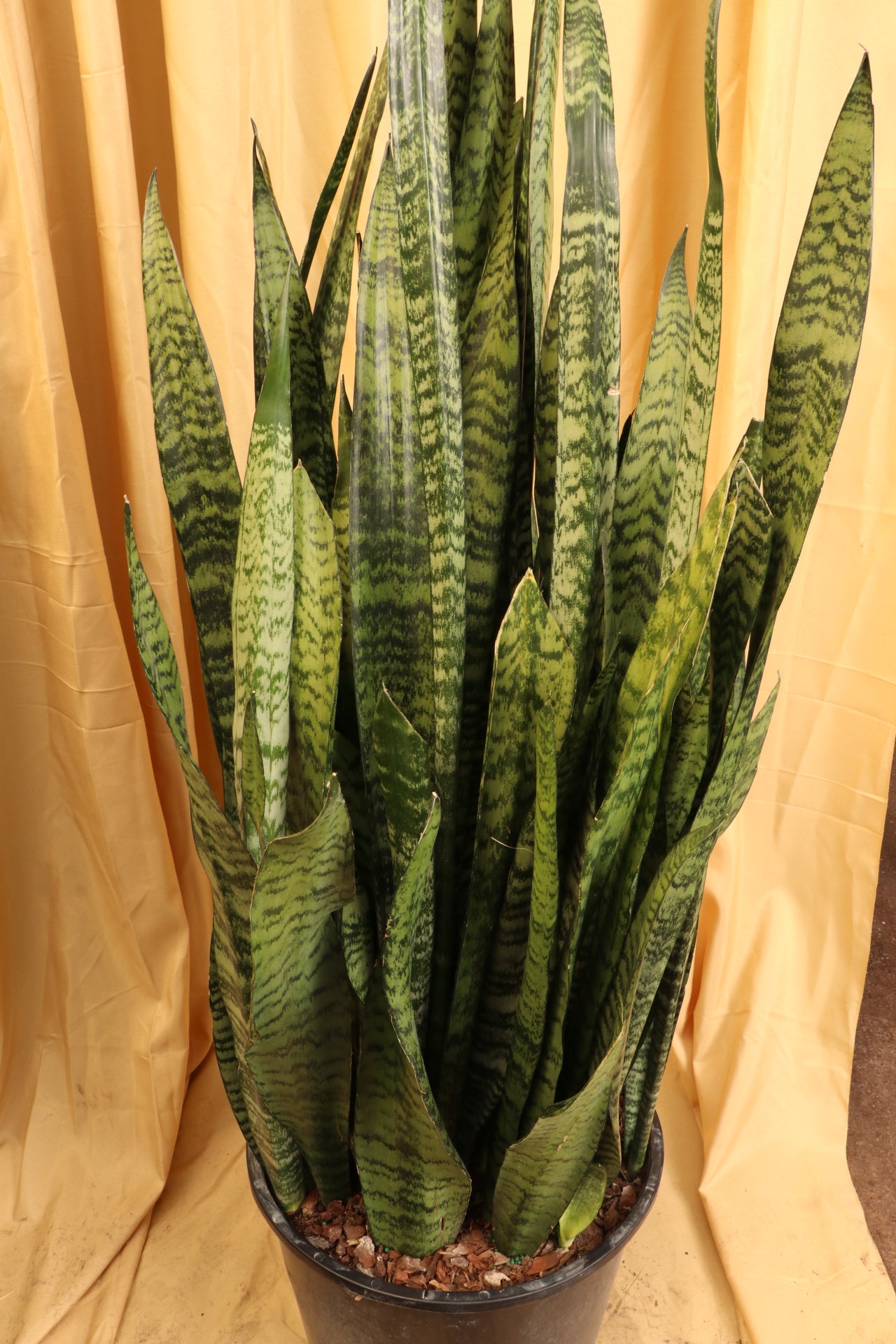
extra tall snake plant

extra tall snake plant Full Size Green Snake Plant (Zeylanica)

Sale price$18.73 Regular price$20.81
Save 10%

Pay in installments of $5.20 with ShopPay, AfterPay and Klarna

Shipping Estimate
USA
  • USA
  • CAN

Ships within 48 hours · Estimated delivery Sep 24 - Sep 29

Promo Codes Available:

For Your Every Summer RSVP, with Code: SUMMER15

Description

extra tall snake plant Full Size Green Snake Plant (Zeylanica)Description The snake plant is a type of succulent thats extremely resilient and easy to maintain. Seriously, its hard to kill. It doesnt need to be watered often, and it can tolerate any lightingfrom full shade to full sun. He barely demands anything from you, but he actively offers you something. The Snake plant, aka Sansevieria trifasciata, can purify the air in your house! (NASA said so!) The plant really catches the eye with its vibrant hues and

Description


The snake plant is a type of succulent that’s extremely resilient and easy to maintain. Seriously, it’s hard to kill. It doesn’t need to be watered often, and it can tolerate any lighting—from full shade to full sun. He barely demands anything from you, but he actively offers you something. The Snake plant, aka Sansevieria trifasciata, can purify the air in your house! (NASA said so!)


The plant really catches the eye with its vibrant hues and unique leaves that look like blades. Blades of grass? Medieval swords? That’s up to you. With hunter greens, emerald splashes, and lime highlights, the Trifasciata is an eye-catcher that will spice up any space.


Snake plant wins the “low maintenance” award, permanently

 One time, a customer reached out to us after Covid. He was hoping to replace his plants that had died over the year when no one was in office. He said, "I want all snake plants!" I asked why.


He said, "Over the year and a half we weren't in office, no one was there to take care of the plants. Not surprisingly, ALL the plants in there died… EXCEPT for the few snake plants. They were chillin' like Bob Dylan. No light, no water, no care, no problem."


Snake plant benefits

Mr. Snake is resilient. It can tolerate drought, too much shade, too much light, or lack of fertilizer. This plant is great for beginners, no matter what color your thumb is! The Snake Plant also filters the air indoors.


By inhaling CO2 and converting it into oxygen, even overnight, the Snake plant helps encourage air flow. Snake plants remove allergens and toxins from the surrounding environment—like benzene, formaldehyde, and xylene, among others.


Order a snake plant today

Now that you're an expert in Snake Plantery (that’s the official terminology), order a big Snake plant by 7pm ET to get this plant out of our greenhouse in New Jersey tomorrow. Dahing delivers locally in the NJ/NYC area and ships as far as Chicago and Miami.


Hop on a video call to pick your EXACT big snake plant, and it will arrive just the way it looks in our greenhouse. (If you are wondering about the arrival time, check with the zip-code validator on top of the Add To Cart button.) Our plant shipping solution is truly protective and innovative to ensure your plants arrive safe and intact!


Hop on a video call to explore our greenhouse, and we WILL send out the EXACT plant that you pick out. Just like choosing a plant at a local nursery or garden center, except we have more and fresher plants to choose from—and you can't find our Pafe fine ceramic planter options anywhere else other than our website. :)


For any other questions or concerns, please don't hesitate to reach out to us at [email protected] or call/text (609)-968-7063!


Care


Are Snake plants hard to keep alive?

Snake plants are the easiest plant to keep alive. They’re totally ok in literally any lighting, from full sun to full shade. Put them anywhere you want. Water them occasionally, but it’s ok if you forget. They love to live.


What kind of lighting do snake plants need?

Snake plants are insanely flexible about lighting. Full shade? Bright indirect light? Full sun? It’s all good. It’s a master photosynthesiser who knows how to make do with very little sun and how to protect itself from lots of sun.


How often do you water a snake plant?

Snake plants are VERY drought tolerant. Do anything you want to it except water it. Ok, that was an exaggeration: You should not gift it to your cat and you should water the plant once every month or so.


If you are a regular reader, you're probably familiar with us being reluctant to give a schedule for watering. that's because we don't want to underquote it nor overquote it, and a bajillion factors go into the exact timing. (You don’t have to calculate those factors, just check the soil’s moisture level.)


But this is the only plant we can confidently give a schedule for, because we'll just under-quote it, because they're so drought tolerant. Water around once every month or so and you'll be fine.


If you want to go the scientific way, rather than the calendar method, then monitor the first 2-3 inches of the soil and only water when the first 2-3 inches are dry across a few spots of the soil.


Do Snake plants like bathrooms?

Snake plants love the bathroom! A Snake plant is happy in low lighting and comfortable in temperatures up to 90 degrees. It also purifies the air, and well, we’d bet you could use some air purification in that specific room.


Why are Snake plants so popular?

Snake plants are popular for two main reasons. First of all, they look epic. Zig-zaggy green swords, basically. Second, they’re unbelievably easy to keep alive, regardless of the color of your thumb. If you buy one, you’re kinda stuck forever.


How do I make my Snake plant happy?

Snake plants are inherently happy, like that girl in high school who got straight A’s, made the cheer team, and had supportive parents. Water when the soil’s dry. Put it wherever you want. Sing a lullaby at bedtime. That’s it.


Do Snake plants like their leaves misted?

Don’t mist your Snake plant! It comes from a dry climate, so it doesn’t need misting. In fact, misting can actively hurt your Snake plant. If the water drips down and collects near the roots, it can cause root rot.


Should a Snake plant be by a window?

A Snake plant is happy by a window—but it’s happy just about anywhere, including away from a window. It’s even happy in a dim room with little natural light. Basically, put your Snake plant wherever your heart desires.


Not pet-friendly


Are Snake plants toxic to dogs, cats, or kids?

Sadly, Snake plants are indeed toxic to dogs, cats, and babies—they contain saponins, which can cause nausea, vomiting, diarrhea. For cats, eating a Snake leaf could even hurt their red blood cells through a process called hemolysis.


Factoids


How tall is the snake plant?

Average Snake plants grow 2 feet tall and ½ foot wide—but our full-size snake plants are around 4 feet tall. If they were actual snakes, they’d be reticulated pythons (we looked it up, that’s the longest snake).


That height was measured when we wrote this—better to check with us over a live virtual shopping call. They might be even bigger!


What did NASA say about Snake plants?

The NASA Clean Air Study, led by NASA in association with the Associated Landscape Contractors of America, found that Snake plants are particularly good air purifiers. The study investigated which plants could keep a space habitat healthy. Snake plants could!


Is it good to sleep next to a Snake plant in the bedroom?

It’s beneficial to sleep next to a snake plant. First of all, it purifies the air and breathes out oxygen, helping you sleep peacefully. Second, it’ll make you smile when you wake up next to it in the morning.


Does the Snake plant make oxygen at night?

Most plants don’t release oxygen at night, but the Snake plant does. Most plants need light to photosynthesize—the process that takes in carbon dioxide and releases oxygen—but the Snake plant barely needs light, even during the day.


Can I touch my Snake plant, or is it poisonous to the touch?

The Snake plant’s sap can cause an itchy skin rash. We recommend wearing gloves when handling the Snake plant, unless of course you are in the market for an itchy rash. That would be strange, but you do you.


Do Snake plants smell good?

When a Snake plant flowers, it smells like vanilla. Some even say jasmine or banana. Unless you hate jasmine or banana (we refuse to believe anyone hates vanilla), it’s delightful. When it’s not flowering, it has a mild planty smell.


Does a Snake plant flower indoors?

A Snake plant can bloom inside, but it’s rare. It’s also not a good thing. Snake plants tend to flower when they’re afraid they’re dying, so they can send their progeny off into the world before they meet their fate.


If you’ve neglected your Snake plant so much that it freaks out and tries to make babies, you win a special medal for Plant Neglect. Snake plants hardly ever die, so they hardly ever flower. It does, however, smell really good. Win some, lose some.


Rumors


Why is the Snake plant called “mother-in-law’s tongue”?

The Snake plant is called “mother-in-law’s tongue” because the leaves look like sharp tongues, and . . . Well, there’s a certain stereotype. If you had a sharp-tongued MIL, you probably wouldn’t need to ask. Maybe ask your partner.


Do Snake plants ward off evil?

In African culture, Snake plants ward off evil spirits. In some Asian countries, they block negative Chi, and in China especially, they have positive feng shui. Plus, in all cultures, it demolishes carbon dioxide and other toxins in the air.


Does a Snake plant attract snakes? Or do snakes hate snake plants?

Snakes hate Snake plants! The sharp-edged leaves can slice up their scaly skin. So if you hate snakes as much as snakes hate Snake plants, get some Snake plants to keep the snakes away. (Say that five times fast.)


What’s the best room in the house for a Snake plant?

Put the Snake plant wherever you want! Snakey doesn’t care whether he sits by the north window or the south. In feng shui principles, you should put him near your front door, to protect your home from bad energy.


What are the magical uses of a Snake plant?

The Snake plant’s first magical power is air purification. In feng shui, it also symbolizes good fortune, good energy, and prosperity. It protects the home and offers mental clarity. If you don’t need any of that, buy a begonia.


Are Snake plants bad feng shui?

Thoughts are mixed on the Snake plant’s role in feng shui. Many believe that its sharp leaves represent protection and vitality. Others, however, believe you should avoid sharp plants, especially in your home’s relationship area. It could make you sharp-tongued.


Shipping Notes
  • Free Standard Shipping on $100+ Orders to the USA.
  • Except Preorder products are shipped in 48 hours.
  • Delivery to the USA:
  1. Standard Shipping : 3-10 business days
  • If time is of the essence, please consider selecting expedited delivery for faster service.
Exchange/Return Notes
  • We offer a 30-day return/exchange service after receiving.
  • Final sale items are not eligible for returns or exchanges.
  • To process your return/exchange, please contact us at [email protected]
  • Please click here for more details>>> Return & Exchange Policy
SKU: 73852053663

Discover Niche Categories That Outsell extra tall snake plant

Top-Converting Item to Boost Your Average Order

4.4 ★★★★★
Based on 21 reviews
Sort
Highest Rating
Newest First
Oldest First
Product Reviews
C
Verified Purchase
Caryss Wood-Behan
West Palm Beach, US
★★★★★ 4
Lamott's "Bird by Bird" is a real tweet
Format: Paperback
In "Bird by Bird," Anne Lamott relates the growing pains felt by all fledgling writers, including herself at one time, and the importance of staying on course until the job of writing is done. The book is sown with plenty of humorous anecdotes, zany analogies and colorful metaphors - in short, the emblematic, original style of writing for which Anne Lamott is best known. "Bird by Bird" does not deviate from this signature style by drifting into territories of discussion about proper grammar, form and other pedestrian aspects of writing. She feathers her nest in a creative, engaging format, filling it with stories of her earlier days as a writer and interspersing them with tips and lessons learned along the way. There is no elitism in "Bird by Bird." Lamott demonstrates her humanness in the incidents she shares. When a friend calls to say that her book has been published readers will empathize with Lamott's natural feelings of jealousy and inferiority. When she ends up writing about those unpleasant emotions, the lesson becomes apparent that any topic - especially one that is universally felt, experienced and, therefore, understood - has the potential to be fashioned into the written form. Later on, the author reveals the anxiety and knuckle-cracking anticipation she experiences while awaiting feedback on a manuscript submission. It is impossible not to feel jitters of sympathy as we wait for the outcome to be revealed. For the most part, "Bird by Bird" covers the emotional and creative expanse experienced by the writer from the moment he first coaxes his work onto paper until such time that he deems it finished. Lamott reminds writers that aspiring to have their works published should not trump the sheer joy of writing for writing's sake. The book could prove a valuable addition for a writer who has already begun to see some positive affirmation and movement where his writing is concerned. For a beginner, however, this book might miss the mark due to its absence of writing fundamentals. Lamott does address this subject, however, in a general sense when she alludes to writers' groups and writers' workshops. The few flutters of grandstanding that occasionally manifest as Lamott tells her story seem more than justified; she deserves recognition, to be sure. Despite a thorny start, Lamott has arrived - observing, reflecting and, finally, writing it all down from her position in the catbird seat.
WAS THIS REVIEW HELPFUL?YesReportShare
Reviewed in the United States on March 13, 2009
D
Verified Purchase
Diana Paraskevas
Birmingham, US
★★★★★ 5
One of the Most Emotionally Honest Books on Creativity
Format: Paperback
Bird by Bird: Some Instructions on Writing and Life endures not because it offers rigid writing instruction, but because it understands the emotional reality of trying to make art while remaining a functioning human being. Lamott approaches writing with humor, candor, and an unusual willingness to acknowledge the insecurity, vanity, paralysis, and vulnerability that often accompany creative work. What stands out most is the humanity of the book. The advice is practical, but the deeper value comes from the permission it gives writers to work imperfectly—to begin messily, doubt themselves, lose momentum, and continue anyway. Lamott treats creativity less as a performance of talent and more as a sustained relationship with attention, persistence, and emotional honesty. The prose itself mirrors the philosophy she advocates: conversational, alive, emotionally direct, and unconcerned with appearing overly polished. At times the tone can feel loose or anecdotal, but that looseness is also part of what makes the book feel companionable rather than instructional in a rigid sense. Beneath the warmth and humor is a serious understanding of observation. Again and again, Lamott returns to the importance of specificity, noticing, and telling the truth about experience without trying to force meaning prematurely. It’s ultimately less a manual on writing technique than a guide to surviving the psychological conditions required to keep writing at all.
WAS THIS REVIEW HELPFUL?YesReportShare
Reviewed in the United States on May 12, 2026
L
Verified Purchase
Lisa
Cuba, US
★★★★★ 5
Honest, humorous and full of passion, Bird by Bird is a how-to guide to approaching writing as a life path.
Format: Paperback
Bird by Bird is Anne Lamott’s love song to the writing process and Anne Lamott’s detailed 12-step program for surviving the craft of writing. Using a loving and humorous voice, she shares intimate details of her experience as a writer, reader and teacher. She relies heavily on humorous stories from her childhood and early writing career to illustrate the pitfalls and joys of writing, while doling out a treasure chest of practical advice to the aspiring and experienced writer. Bird by Bird is a pep talk and a how-to guide to approaching writing as a life path. I’ve read this book many times over the years, and what I always remember most is her description of her relationship with her father, who was also a writer. More than anything Bird by Bird is a memoir, and the reason it has touched so many hearts and inspired so many careers, is because Anne Lamott wears her heart and her life story on her sleeve as she shares intimate and hard won life lessons on and off the page. She writes, “One of the things that happens when you give yourself permission to start writing is that you start thinking like a writer. You start seeing everything as material.” I love this line because it reminds me to give myself permission to be, to remember, to observe and to create. Like Anne Lamott, I grew up in the shadow of loving, charming and powerful writer. I learned the craft and life of a writer from my Mom, and it wasn’t until later in life that I realized that everyone didn’t grow up that way. Reading through with a highlighter this time, I was struck by all the voices Anne Lamott brings to the page. Lammott’s voice is primarily humorous, frank and self deprecating. When she wants to evoke something profound, grave or aspirational, she tends to lean on the voices of her favorite writers throughout the cannon, which she either paraphrases or quotes directly. I really admire this technique, it’s such a great way to vary her advice, give her message more credence while keeping the book in her voice. I want to remember this. There’s a nice example of this early on when she’s talking about what inspires someone to write, she writes, “Interviewers ask famous writers why they write, and it was (if I remember correctly) the poet John Ashbery who answered, “Because I want to.” Flannery O’Connnor answered, “Because I’m good at it,” and when the occasional interviewer asks me, I quote them both.” By bringing Ashbery and O’Connor into the conversation, Lammot elevates her personal experience to a universal truth. Another one of my favorite aspects of this guide / memoir is the realistic depiction of not only the writing but the publishing experience. She debunks every single romantic notion of writing – while carefully creating her own shrine to the experience. One of my favorite moments is when she breaks down any hope of a feeling of satisfaction for a writer. She perfectly sums up the endless aching and seeking inherent to the writing life. She writes: How do you know when you’re done? This is question my students always ask. I don’t quite know how to answer it. You just do. I think my students believe that when a published writer finishes something, she crosses the last t, pushes back from the desk, yawn, stretches, and smiles. I do not know anyone who has ever done this, not even once,” This excerpt makes me laugh out loud every time I read it. I think because in my experience as a publicist / publisher I do know some authors who have done this, and those are the ones I fear most. Honest, humorous and full of passion, this book separates the die-hards from the casual writers, it’s like a litmus test and hazing, and if you make it to the end you emerge a convert.
WAS THIS REVIEW HELPFUL?YesReportShare
Reviewed in the United States on December 9, 2016
P
Verified Purchase
p.j. lazos
Lowell, US
★★★★★ 5
Bird by Bird is a delight for readers and writers alike
Format: Paperback
I’m on this rereading kick and also on a reading-books-about-writing kick and Bird by Bird, Some Instructions on Writing and Life, by Anne Lamott, heads the list. Part writing guide, part life coaching session, and part true confessions, Bird by Bird is a delight for readers and writers alike. One summer, Lamott’s ten year-old brother had waited three months to begin a project on birds that was due the next day. Close to tears and unable to even move, he sat among his books and papers at the kitchen table. Lamott’s father, a writer and maybe Lamott’s favorite person ever, put an arm around his son and said, “Bird by bird, buddy. Just take it bird by bird.” The book is peppered with such sage advice while Lamott remains the quintessential social commenter and odd man out, full of more than a few stories of her life gone wrong. What makes her writing so enjoyable is the rough terrain she’s crossed to bring it to us through glimpses of her childhood and the rest of her life. Lamott shares some of her writing techniques such as sitting at her desk and staring at a small one-inch empty picture frame when she’s out of ideas. She watches that picture frame until something comes to her. Sometimes she gets up to make a phone call or eat a snack while the picture frame sits there as a reminder, but she always goes back to her chair and that picture frame. To be a writer, she tells her students, you have to sit your butt in a chair and not get up until you’ve written something no matter how long it takes or how terrible it is, and then you have to do that again the next day and the one after that. You may write four or five pages before you get one or two good paragraphs, she says, but keep at it. She encourages her students to reveal their most desperate fears and phobias and bring them to the surface for dissection and reassembly as literary gold. Unfortunately for Lamott, her worst moments have become her best prose. Take the most horrible school lunch ever and turn it into a brilliant comedic twist of events. Never miss and opportunity to go for your own jugular, but just flash the knife, don’t really cut your throat. In Lamott’s world, writing is therapy and since she’s taken some of the heaviest stuff of her life and exposed it, often with hilarity, to the sun and wind and elements where it can be alchemized, she’s become her own therapist. Or maybe she still needs therapy, but at least there’s a great story to be told. I question whether the pain and suffering is necessary for the craft or whether it just makes the writer more observant -- nothing like fear to sharpen the senses -- and hence, more readily able to translate those observations to the rest of the world. Once you’ve mined your childhood for all the despondency and suffering you can recall along with all the nasty characters that have wreaked havoc upon you, stick them between fictional pages for everyone to see, while being careful to obscure them so ingeniously through changes of place or time or hair color that no one will recognize themselves. Also, always give the male character a small penis. It cuts down on potential libel suits. These are your the tools of the trade, says Lamott. Your heartbreak, your inability to fit in, your desire to be part of another family, relationship, community, etc., one that obviously had it better than yours, and your unlimited ability to manipulate facts. Also, never miss an opportunity to capitalize on all your accumulated crap. If you are a writer, Bird by Bird will provide you with a step-by-step guide that will boost your writing by degrees, from s***ty first drafts to publication, but my guess is that Bird by Bird will help you with your life maybe just the teeniest bit more.
WAS THIS REVIEW HELPFUL?YesReportShare
Reviewed in the United States on November 14, 2015
K
Verified Purchase
Kendall Giles
Houston, US
★★★★★ 5
Getting words onto the page!
Format: Kindle
There seem to be as many books about how to write as there are actual writers, yet Anne Lamott makes a solid if not altogether inspiring contribution to the collection. Also known for her non-fiction books dealing with depression, Christianity, and alcoholism, in Bird by Bird author Lamott turns her humor and autobiographical lens toward offering sage advice and inspiration for writers of all levels. While far from Strunk and White's The Elements of Style, and mute on the meter of poetry and the tropes of science fiction, Lamott instead focuses more on psychological issues that confront and haunt writers from all genres, such as defeating the blank page, avoiding perfectionism obsessions, cranking out that first draft, and writing for the right reasons. A breadth of writing advice, Bird by Bird gets its title from wisdom Lamott's father once gave to her brother, incapacitated by the task of writing a school essay on birds. The senior Lamott advised the younger to break the assignment down into manageable chunks: "Bird by bird, buddy. Just take it bird by bird." Divided into five parts, in part one Lamott first addresses writing itself -- getting words onto the page. Lamott starts by giving the aspiring author permission to write and then by encouraging the author to just get the words onto the page. Go ahead, just create that first, messy draft: "Almost all good writing begins with terrible first efforts. You need to start somewhere." She then suggests focusing more on creating compelling characters than worrying about plot: "If you focus on who the people in your story are, if you sit and write about two people you know and are getting to know better day by day, something is bound to happen." She even discusses a short story template -- action, background, development, climax, ending -- that can be used as an initial story structure. Dialog is important too, and compelling dialog can be influenced by real-life encounters, but the main goal is to get that first draft written, in short steps, a little each day. In part Two Lamott talks about the writing frame of mind -- about how authors can psyche themselves into writing using rituals at the beginning of each writing session and by believing in the stories they are telling. Part Three presents specific tools authors can use to help recall memorable quotes and scenes, how to collect new material, and how to gain feedback on drafts, such as using index cards on which to jot down ideas, joining or forming writing groups and sending drafts to a short-list of people an author trusts to give honest and useful feedback, and overcoming writer's block by refilling the author's emptiness through short exercises just to get the fingers moving. In part Four Lamott talks about the publication process and why an author simply giving herself to the writing act in and of itself is often the best reward: "There is no cosmic importance to your getting something published, but there is in learning to be a giver." Part Five contains final words of wisdom and encouragement for the budding author. For example, an author should not hesitate to use experiences from their childhood (and tips are given on how to avoid libel when using autobiographical material). Overall, rather than being the strict writing schoolmarm, Lamott is more like a writing companion. She chats over your shoulder with you at the end of the day, sipping a glass of wine, reflecting on her own experiences in the writing trenches, and sharing what worked for her in achieving success. Her advice is true and her voice is encouraging -- she uses self-deprecating humor to convince any reader that their writing anguish is neither new nor unique since Lamott herself has likely already confronted and conquered those same demons. She persevered and achieved success, and the reader of her book too shall overcome and get their story onto the page. She mentions God throughout, but she does not come across as preachy. Again, she's relating what worked for her, using anecdotes from memorable episodes in her life. There's no magic and no divine inspiration to solve writing problems--she uses real techniques and encouragement to help confront and conquer the blank page. Indeed, we can all use encouragement and insights from someone who's already been there. Like the oft-repeated "Practice, practice, practice" response by legendary pianist Arthur Rubinstein when he was stopped on a street in New York and was asked, "Pardon me sir, how do you get to Carnegie Hall?", Lamott's response to writers in Bird by Bird is just as wise and true, but perhaps even more motivational due to her humor and honest expression from the trenches.
WAS THIS REVIEW HELPFUL?YesReportShare
Reviewed in the United States on April 20, 2011

recommand products